

Nieuws


0 reacties

46x viewed
Offered by our partner WSP - In one of the largest integrated water projects in the Netherlands, the Southern Meuse Valley, four transitions are coming together. That requires leadership, courage to let go of old patterns, and a willingness to work together across organizational boundaries.
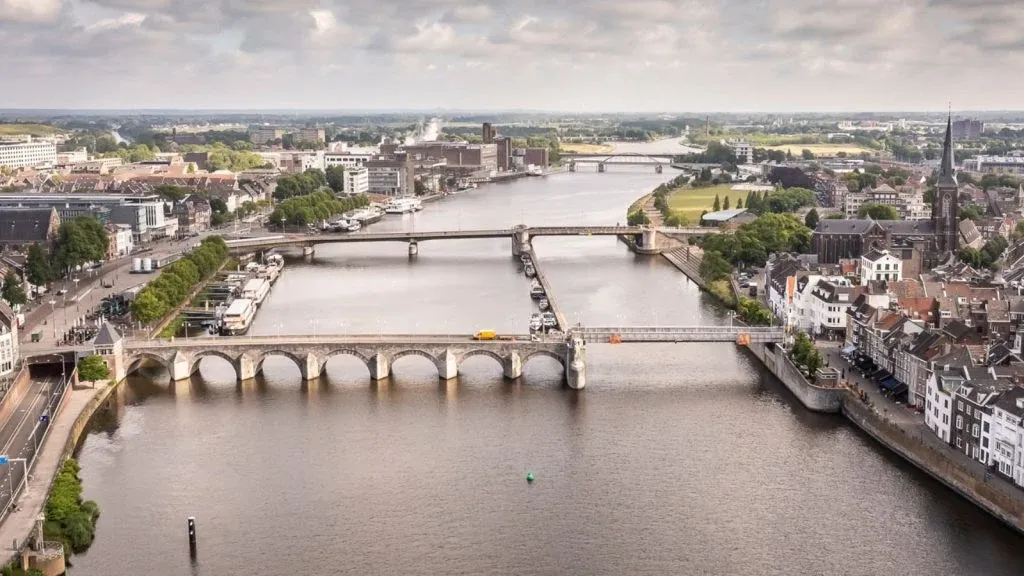
The Southern Meuse Valley faces a task: with expected peak discharges of more than 4,600 m³ of water per second over the next two centuries, firm adjustments to the landscape are inevitable. But how do you protect Maastricht from extreme high water without losing the soul of the city?
.Residents of Maastricht enjoy the view of the water, the historic bridges and the green landscape in and around the city every day. The Meuse is more than a piece of scenery: it is the lifeblood of the city. It contributes to the cultural identity, plays a key role in shipping and ensures that water is drained safely so that the feet of Maastrichtians stay dry.
Maastricht's residents enjoy the view of the water every day.
Four transitions at once
.The challenge in this Southern Meuse Valley project: four major transitions must take place here simultaneously. Strategic environment manager Jette Eshuis explains: "Flood protection, improving the shipping route, spatial development and strengthening nature. They are closely intertwined and require smart, integral choices.'
Sailing routes and barriers
.She continued: 'The shipping route through Maastricht is at some points too tight and low for safe and efficient transport. Risks also arise at the entrance to the Julianakanaal at high flow rates on the Maas. Ships from Belgium enter stagnant water there at too high a speed - dangerous for both people and ships. In 2017, we already developed solution directions, which we are now developing further.
The flood defenses between Eijsden and Borgharen are too low or not strong enough. For this we are investigating solutions such as reinforcing dikes or widening the riverbed.'
Preserving transformation and nature
.Then there is the transformation of industrial sites into lively living and working areas, as well as the desire to preserve nature and recreation. Eshuis: "Maastricht is transforming. Outdated industrial sites on the water are making way for lively living and working areas. In doing so, we are looking for connections between east and west banks - literally, via bridges, and figuratively, in spatial cohesion.'
'Cycling and walking in nature contributes to the health and happiness of Maastricht people. And a robust and resilient river system to nature and biodiversity. If we have to widen the river for water safety, we combine that with new nature, so that there will always be green space.'