

Praktijkverhalen


0 reacties

52x viewed
Within innovation project Success4BioActives, under the direction of Brightlands Campus Greenport Venlo, various research groups from Maastricht University and HAS green academy are working together with research companies Compas Agro, Botany, Blue Engineering and Brightlabs. What are the various parties working on?
Freddy Troost, associate professor and research leader, and Colin Dohmen, PhD student, talk in this duo interview about their role from Maastricht University within the project.
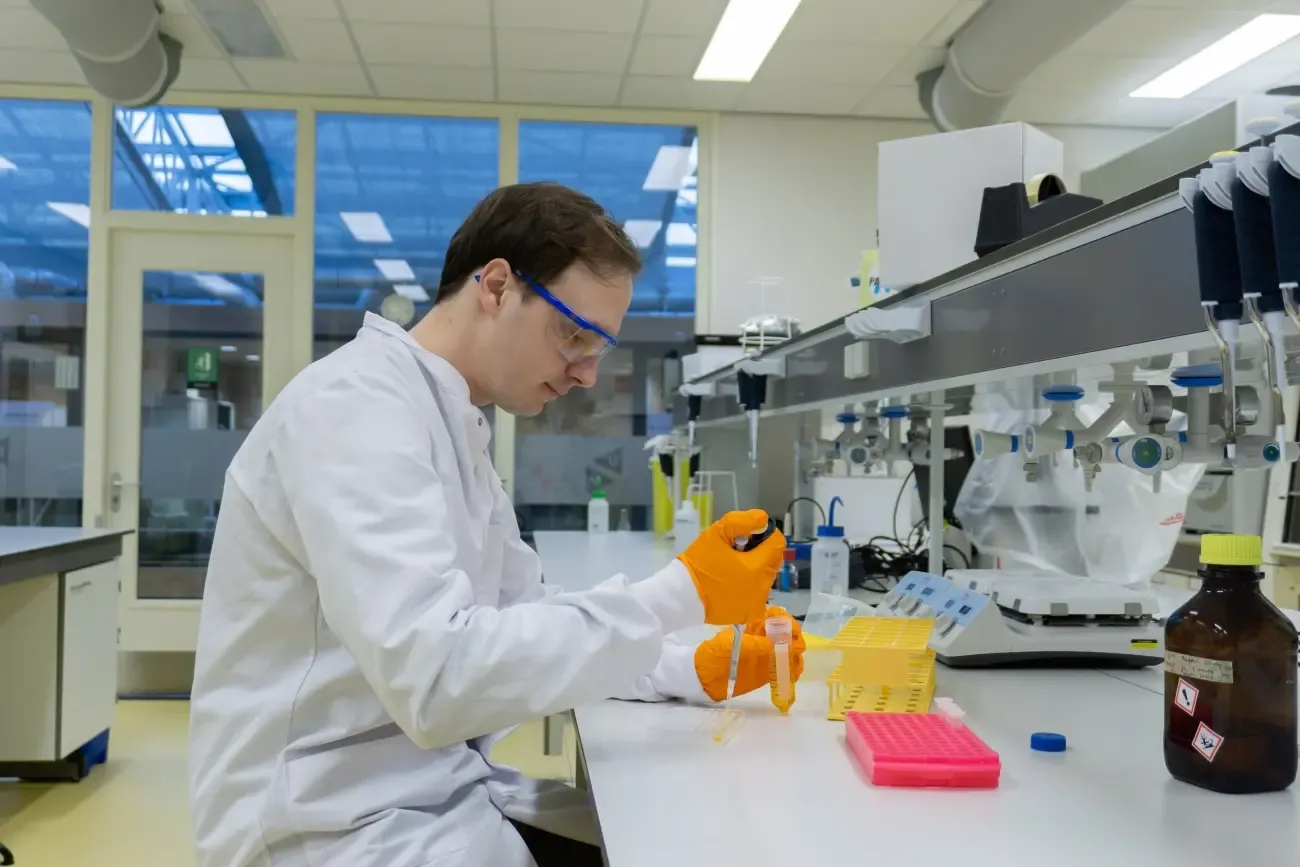
Reduce sugar intake
.Freddy and Colin, within Success4BioActives, are specifically investigating the effect of bioactive ingredients on sugar metabolism in the body. The focus here is on polyphenols: a large group of plant substances with potential health benefits. Colin: 'The effects of polyphenols are diverse: from anti-inflammation to improved sugar regulation and even possible effects on cognition.'
Success4BioActives builds on previous research and projects including Value of Limburg Fruit, in which Maastricht University collaborated with Hasselt University and regional partners to investigate the health effects of bioactive ingredients in apple varieties. Colin: 'We then investigated polyphenols in fruit and their effect on sugar metabolism. In Success4BioActives we used that knowledge, but the focus is on vegetables and we are looking, for example, at which polyphenols can reduce sugar absorption in the intestines.'
Mix of bioactive ingredients
.The team investigated polyphenols in several steps: first enzyme tests were performed, followed by experiments with cell systems. Carbohydrates in our food must first be broken down by digestive enzymes before the sugars can be absorbed in the gut. Polyphenols appear to be able to influence both the breakdown and absorption of sugars. Combinations of polyphenols were found to have much greater effects than individual substances. Therefore, the research focused on mixtures of bioactive constituents, as found naturally in crops.
Colin: "If you eat an apple or broccoli, there are lots of different polyphenols in there. We saw that when we combined three polyphenols, the digestive enzymes became less active. This is beneficial because then less carbohydrates are broken down, and thus less glucose is absorbed by the body. Moreover, this glucose was also less well absorbed by intestinal cells, due to the effects of polyphenols on glucose transporters in the intestine. The polyphenols themselves are also absorbed by our bodies, with greater absorption of polyphenols being good for health. Interestingly, we saw that polyphenols are better absorbed from the gut when taken in combination with other polyphenols. That shows that this combination works much better than taking the polyphenols separately.'
Intensifying valuable collaborations
The strength of Success4Bioactives lies in the close collaboration between fundamental laboratory research, innovative cultivation methods and the ambition to realize health benefits for consumers. Freddy: "We have been doing research at Brightlands Campus Greenport Venlo since 2016. From the beginning, our mission was to cooperate more intensively with companies on the campus. The cooperation has definitely been strengthened during this project. We now have short lines of communication with Innoveins and Brightlabs for complex analyses, and with Compas Agro who has intensive contact with growers and can advise them on optimal growing conditions to increase the content of healthy ingredients in crops.'
According to Freddy, this cross-fertilization is essential: 'Science and cultivation have to go hand in hand here. Which crops contain which polyphenols, and how can we increase those concentrations? In the near future, we will also include the role of dietary fiber in this research.'