

Nieuws


0 reacties

3x viewed
A medical revolution is taking shape in the south of the Netherlands that could transform the nature of healthcare. It concerns regenerative medicine: therapies in which the body repairs or replaces damaged tissue. The reason this development is progressing so rapidly here is down to the way in which Limburg organises innovation.
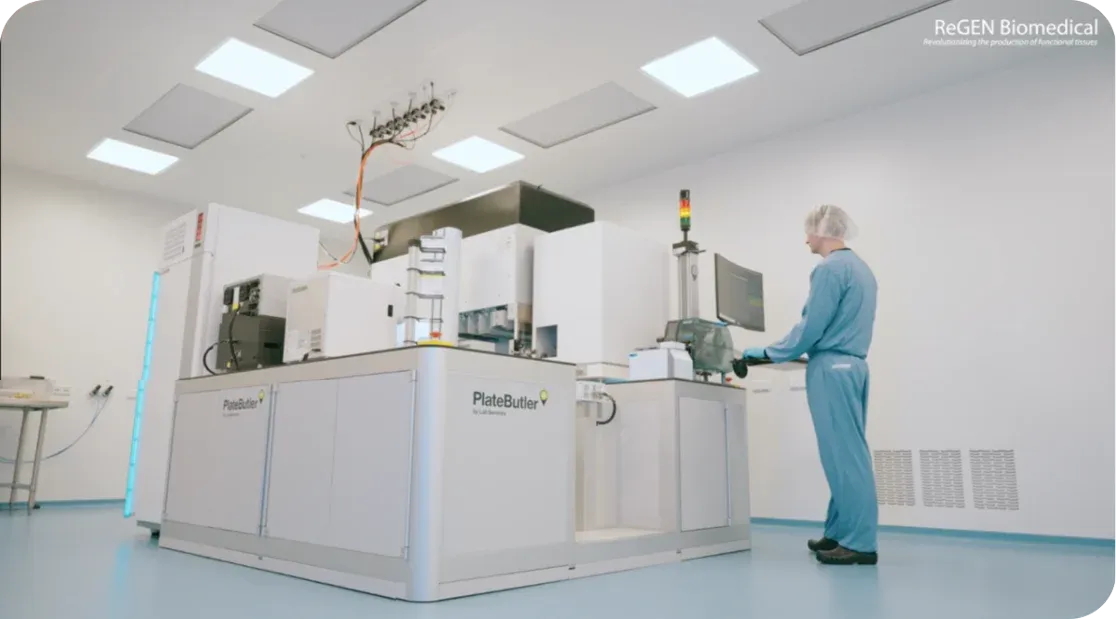
Photo: ReGen Biomedical
Limburg’s innovative strength is driven by the Brightlands ecosystem. Four campuses spread across the province are the driving forces behind this. Christine Coch, CEO of Brightlands in Maastricht, calls this the Triple Helix model: government, knowledge institutions and the business community join forces to bring medical breakthroughs into practice more quickly. “Scientific discoveries often originate in a laboratory. Only then is the step towards commercialisation taken.”
Tangible results
This is achieved through so-called valorisation: translating academic knowledge into social and economic impact. Coch describes Brightlands in this process as a venture builder that contributes to this acceleration. This specific task lies with the Maastricht campus. “We help researchers to build companies around their knowledge that bring innovations to market. Think of support in developing a business model or attracting investors.”
The approach is starting to yield visible results. Companies are building on research from the region, and international partners and talent are increasingly finding their way to Limburg.
The next step: scaling up
Researchers are currently still developing many regenerative therapies in laboratories or small-scale studies. The next step is to make them available to patients on a larger scale.
This is what ReGEN Biomedical focuses on. The company uses technology to cultivate living cells and small pieces of tissue in an automated and controlled manner. “Clinical studies have already shown that regenerative therapies can work,” says Marleen van Nuenen, Managing Director of ReGEN Biomedical. “The question now is: can we also produce them for large groups of patients?”
To make this possible, biology and technology are coming together. Bioreactors, robotic arms and automation systems form a production line for living cells. Cell biologists, engineers and software developers are working closely together to make the process reliable and scalable.
A different perspective on healthcare
If this development continues, it will radically change the way we organise healthcare. Many treatments focus on managing disease. Regenerative therapies aim to enable the body to restore its own functions.
Van Nuenen speaks of a fundamental shift. “We are moving from care to cure. Instead of treating someone for years, with regenerative medicine we tackle the problem at its source.”
Such a change also requires adjustments within the healthcare environment. Researchers and regulators must first extensively test and approve new therapies. They must then be integrated into the healthcare system and the way in which care is reimbursed.
For Limburg, this shift means something else entirely. A region long known for its traditional industrial economy is transforming into a knowledge-intensive and sustainable economy. “You can see that the ecosystem is working,” says Coch.
Want to know more about the initiatives surrounding regenerative healthcare in Limburg? Visit brightlands.com/limburg-vernieuwt.