

Nieuws


0 reacties

73x viewed
"Brightlands Maastricht Health Campus strengthens Limburg's reputation as an incubator for healthcare innovation"
It is becoming increasingly well known that wonderful health innovations are being developed in the province of Limburg. A driver of these innovations is Brightlands Maastricht Health Campus; here researchers, clinicians, entrepreneurs and students work together on innovations at the interface of medicine, healthcare and technology.
One of the important functions of Brightlands Maastricht Health Campus is to help scientists and medical professionals take their innovation to market and turn it into a successful business. Many success stories have already emerged from this and are now becoming increasingly well-known abroad as well. In late November, an international press group visited Brightlands to learn more about these innovations.
Yves Slenter, Community Development Manager at Brightlands Maastricht Health Campus, kicked off the press day and showed how Brightlands has now established more than 90 companies. The campus is a place where hospital Maastricht UMC+, Maastricht University and companies work together to create the healthcare of the future. The international media visited some of the innovative companies located there: Maastro, Maastricht Instruments and ReGEN Biomedical.
World-wide data analysis with PHT from Maastro
Maastro is anno 2025 an independent, top specialist center for radiotherapy with locations in Maastricht and Venlo. The company specializes in proton therapy, an innovative and accurate way of irradiating cancer patients. During the press day, André Dekker, Professor of Clinical Data Science, discussed the importance of AI within this industry in order, among other things, to predict the course of disease in patients. This requires a lot of international data. His credo is: "If you can't bring the data to the research, you have to bring the research to the data."
For this reason, he developed the Personal Health Train; an innovative way to analyze information from institutions worldwide without having to share privacy-sensitive data. This "train," now passes major hospitals and radiotherapy centers in Europe, the United States, China, Brazil and India, among others. The data collected is used, among other things, to analyze scans. The result of such an analysis is, for example, an AI model that is much better at drawing in a tumor and predicting the course of the disease, than a human can ever be. With the help of AI, the tumor can also be irradiated more precisely and which patients are eligible for proton therapy can be analyzed efficiently. These AI developments allow healthcare personnel to be relieved and supported, which is very important now and in the future due to staff shortages. It also allows hospitals to gain insight into what they can further improve in terms of specific treatments.
Biological tissues for regenerative medicine
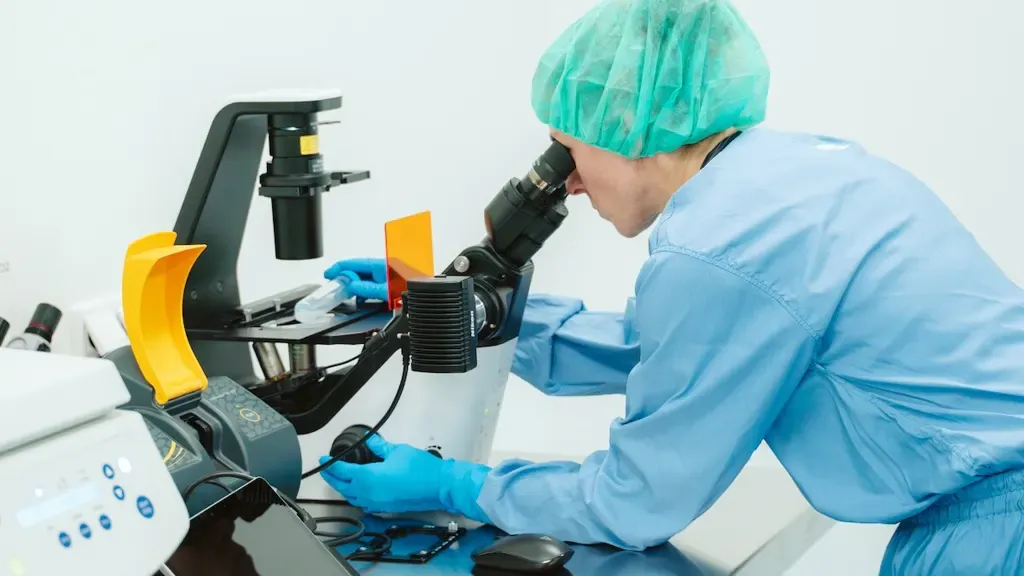
The press trip continued to ReGEN Biomedical. This company is developing technology for growing biological tissues for regenerative medicine and pharmaceutical screening. This tissue should become affordable and thus ultimately accessible to all patients. Han van 't Klooster, COO at ReGEN Biomedical emphasized that the company uses an automated, closed-loop production setup to produce affordable and high-quality tissue therapies, with consistent quality.
"We believe that our efforts will dramatically change healthcare, as it is a revolution to replace damaged parts of skin and organs with cultured tissues. We expect to see a regular flow of cultured tissues for transplantation within a decade. It will greatly change the way hospitals operate in the coming decades."
Insights into energy management of patients
Maastricht Instruments BV was founded in 1998 and has grown into a specialized high-tech company offering innovative technical solutions in the fields of life sciences and medical. It offers customers around the world new research equipment such as indirect calorimetry equipment, portable healthcare solutions and specialized life science tools. One of the innovations on display to the press was the Respiration Room. This respiration chamber helps researchers better understand the energy management of certain patient groups.
This allows targeted advice to be given in the areas of nutrition, exercise and sleep. The respiration chamber consists of a completely closed circuit connected to an innovative analysis system. This system continuously measures the amount of 02 and CO2 in the exhaled air, nutrients and waste products. This gives researchers a very accurate picture of a person's metabolism and energy balance.
Source: ICT & Health