

Nieuws


0 reacties

8x viewed
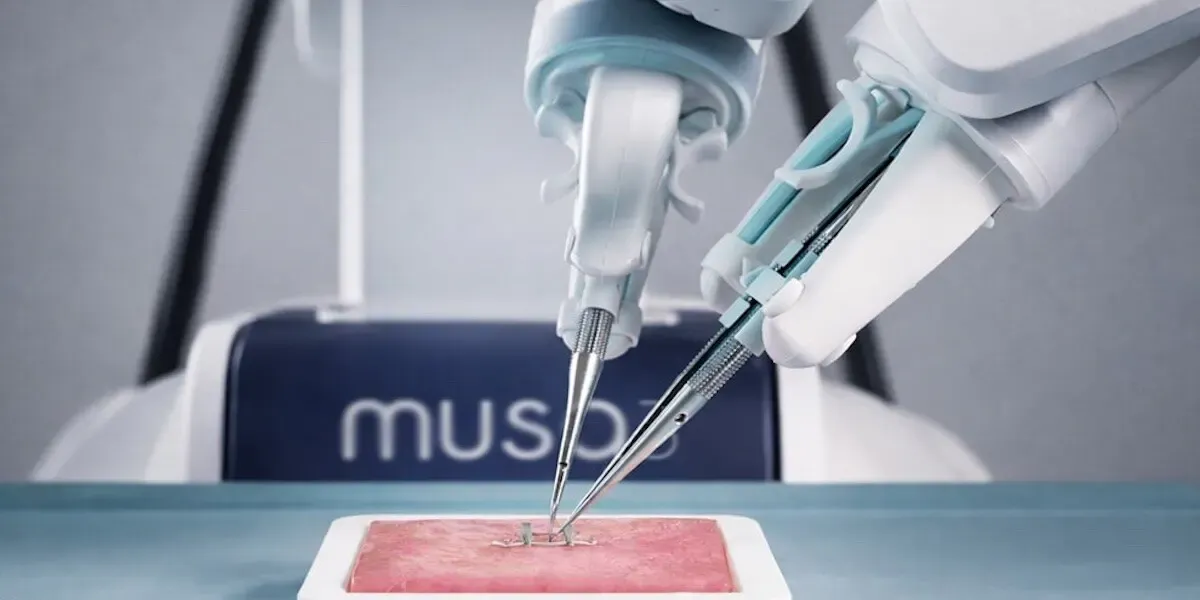
At Maastricht UMC+ (MUMC+), a patient underwent surgery using the latest version of the MUSA microsurgical robot for the first time in early June. The so-called MUSA-3 was developed by the Eindhoven-based medtech company Microsure, which grew out of research at Eindhoven University of Technology (TU/e). The robot is designed to assist surgeons in performing extremely precise microsurgical procedures and, according to those involved, can contribute to wider access to complex care.
Microsurgery is used in procedures such as reconstructive surgery following cancer, the treatment of lymphoedema and the repair of damaged nerves. Such procedures often require working on blood and lymph vessels with a diameter of just a few millimetres. As a result, they are heavily dependent on the expertise of a relatively small group of specialist surgeons and centres.
Photo: Microsure
Robot enhances surgeon’s precision
The MUSA-3 is designed to refine human movements and filter out unwanted vibrations, enabling highly precise movements. The technology does not replace the surgeon, but supports them during complex operations.
The development of the robot is the result of a long-term collaboration between engineers from TU/e and microsurgeons from MUMC+. According to plastic surgeon Tom van Mulken, who works at MUMC+ and is co-founder of Microsure, the combination of medical and technological expertise was essential to the creation of the system.
It is expected that robotic assistance could make complex microsurgical techniques more accessible to more hospitals and healthcare professionals. This could contribute to a better distribution of expertise and possibly also to reducing waiting times for patients who currently often have to rely on specialist centres.
Clinical trial
The first procedure using the MUSA-3 is part of a clinical trial investigating the safety and effectiveness of robot-assisted microsurgery. The study is looking at applications such as breast reconstruction following breast cancer, lymphoedema treatments, complex reconstructions following trauma or cancer, and nerve repair following injury.
In addition to technical feasibility, the researchers are also investigating potential effects on healthcare organisation. Key questions include whether the robot can contribute to shorter operation times, fewer complications and a shorter length of stay. If such benefits are demonstrated, this could not only improve the quality of care but also potentially reduce the pressure on healthcare capacity and healthcare costs.
Medtech innovation
The collaboration between TU/e and MUMC+ led to the establishment of Microsure, a university spin-off, in 2016. The company focuses on the development of robotic technology for micro- and supermicrosurgery. The introduction of the MUSA-3 marks a new step in the clinical application of this technology.
Whether the robot actually leads to better outcomes and wider availability of complex microsurgical care remains to be seen in the ongoing clinical trial. The first patient treatment will serve as an important practical test.
Robotic surgery at MUMC+
Earlier this year, Maastricht UMC+ strengthened its position as largest centre for robotic surgery in the Netherlands with the commissioning of two Da Vinci 5 systems and one Hugo robotic surgery platform. This means that for several months now, the hospital has had six advanced surgical robots at its disposal, more than any other Dutch hospital. Among other things, the new systems offer improved 3D visualisation, greater precision, better ergonomics and extensive training opportunities for surgeons. Tactile feedback will also be added at a later stage. In addition to the new robots, Maastricht UMC+ already uses specialised systems for paediatric surgery, microsurgery and neurosurgery.
The hospital is also collaborating with industry partners on further innovations. The new generation of robots also forms a basis for future applications of data analysis and artificial intelligence in the operating theatre. For patients, robot-assisted surgery can lead to smaller incisions, less blood loss and a faster recovery, whilst surgeons benefit from reduced physical strain during complex procedures.
Source: ICT & health