
08 July
 Online webinar
13:00 - 14:00
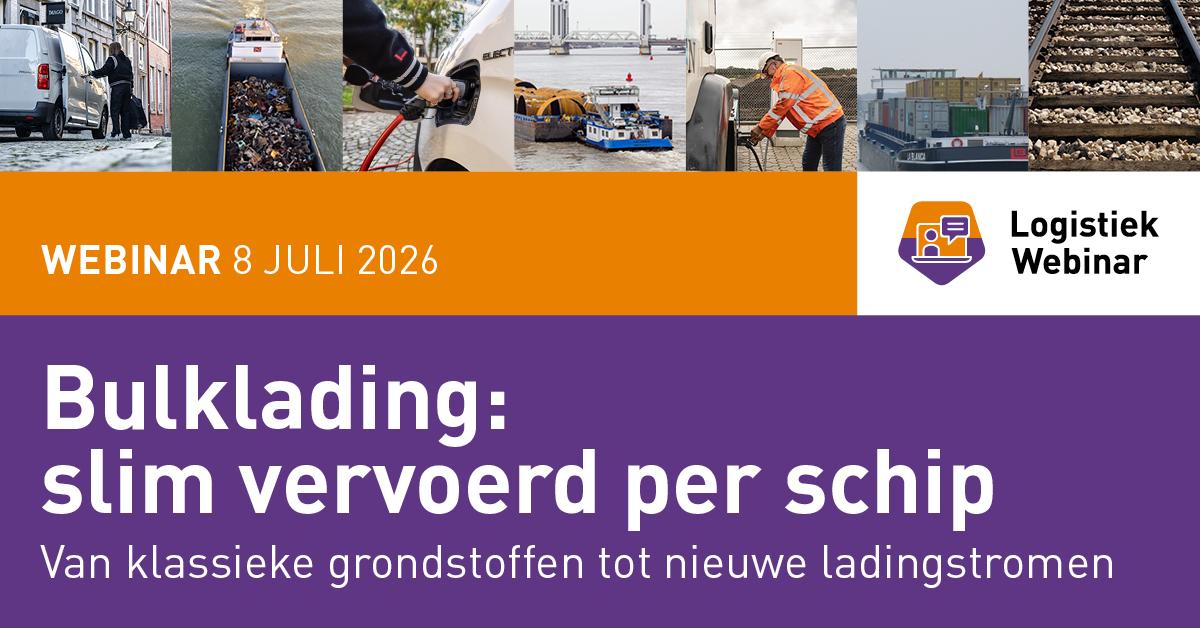
From classic raw materials to new cargo flows
Do you transport bulk or general cargo by road? There is an alternative that can be more reliable, cheaper and more sustainable: inland shipping. Even if your company is not located near the water, this can be an interesting alternative. You will hear all about this during our webinar 'Bulk cargo: smartly transported by ship'.
Practical information
- Where: online
- When: 8 July, 1 pm - 2 pm
- Cost: participation is free
- For whom: companies that transport (or have transported) bulk or general cargo flows, e.g. construction materials or circular raw materials.
Content webinar
Water transport offers great advantages for transporting almost all bulk and general cargo. It is reliable, cost-effective, efficient as well as producing substantial CO₂ reductions. So the question is not whether inland shipping is interesting for you, but how you use it. You will hear more about that during our webinar. Experts and entrepreneurs explain how the switch to water works in practice:
Façade Beton opts for inland shipping
Façade Beton produces a variety of paving materials for (semi)public spaces and private gardens. The Maastricht-based company increasingly has customers outside the region and therefore wants to transport its products by barge. What advantages does inland shipping have for the company? What does this step mean for the logistics process?
By Richard Hermans of Façade Beton
What does transport by barge look like in practice?
From what quantities per week or time is inland shipping interesting? How do you arrange transport to and from the port? Is storage also possible at the port? You will also hear whether transport by barge is interesting if your company is not located near the water. Just as if this also applies to your supplier or customer.
By Wessem Port Services, L'Ortye and Kalle & Bakker
What will it do for your company?
The experienced logistics brokers of Logistiek Bereikbaar can work out technical and business scenarios for you for transport by ship. This way we know what savings it can bring your company, which port you can best use and what type of ship. We guide you from the first exploration to the first voyage. You will also learn more about the modal shift subsidy, which makes transport by ship even more attractive.
By Miranda Volker of Logistiek Bereikbaar
Examples bulk cargo or general cargo
The webinar is interesting if, for example, you transport the following goods: building materials, powders and granulates, residual products from the processing industry, liquid products (chemical or otherwise), waste, rubble, soil, milling asphalt, newly reprocessed circular materials, biomass such as wood chips. But also piece goods such as paper rolls or (parts of) prefab houses.