 Fotografie Ron Wiersma
2 October | Duurzaam | ShiftLimburg
A look back at the PVB Limburg annual event: moving forward together!
How do you persuade entrepreneurs to work together on energy, water, greening or mobility? And perhaps even more importantly: how do you ensure that plans don’t just remain on paper?
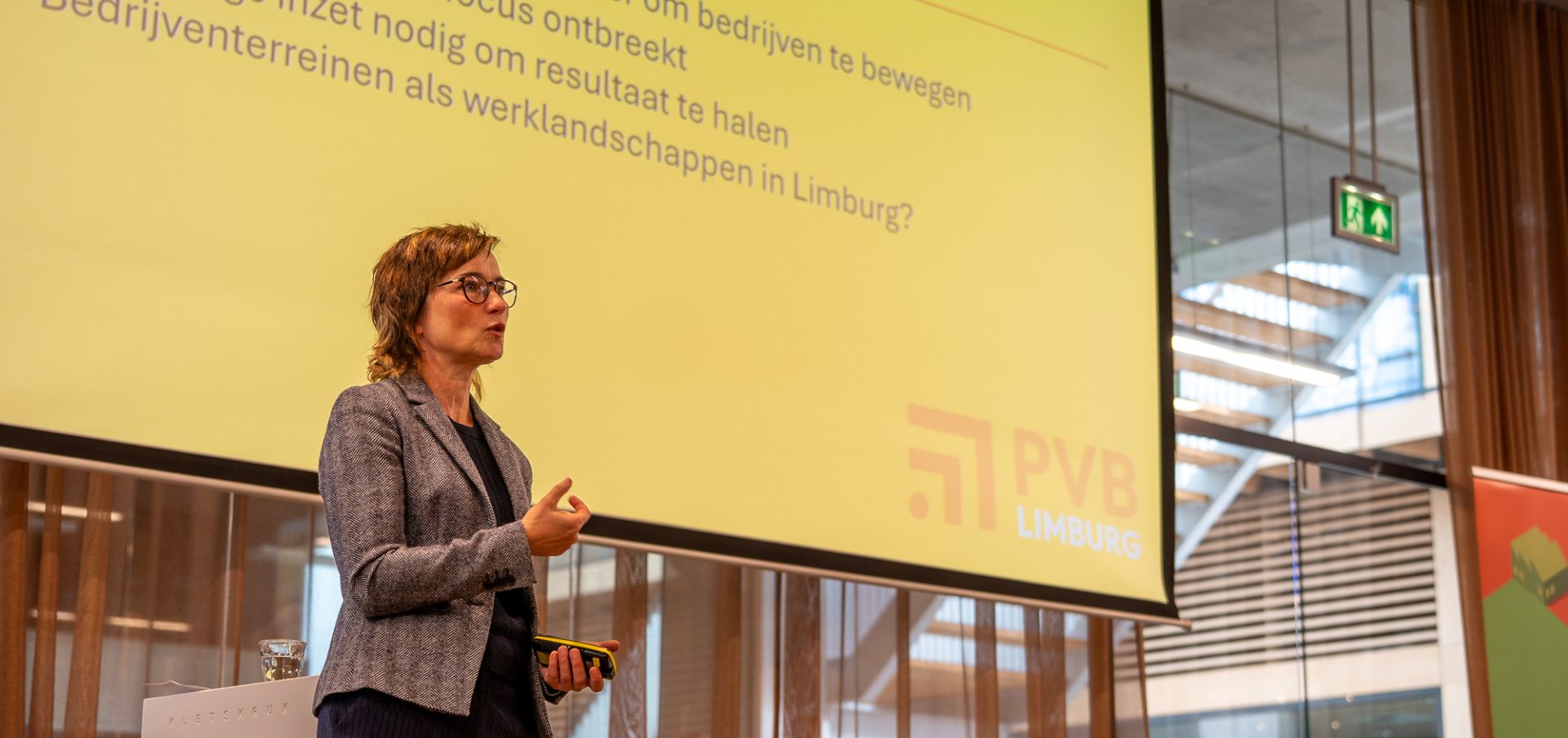
During the PVB Limburg annual event ‘Samen Vooruit’ on 16 September at Villa Flora in Venlo, it became clear just how much has been set in motion in recent years. But it also highlighted where the next challenge lies. Union membership is growing, partnerships have been established, and concrete initiatives are emerging in an increasing number of business parks. Now is the time to press ahead.
From planning to implementation:
PVB Limburg is gearing up for the next step
PVB Limburg set out with a bold ambition: to strengthen or increase the level of organisation at at least 49 business parks in Limburg by 1 May 2027. In addition, it aims to establish a local energy hub and/or collective climate adaptation projects at at least 10 of these parks.
During the annual event, Jan-Willem Tolkamp of LIOF took stock of the situation. There are now plenty of initiatives underway, and in more and more places, entrepreneurs, local authorities and other stakeholders are finding ways to collaborate. This also raises a new question: where exactly is the bottleneck? Because finding each other is one thing; launching a joint project is the next step.
Taking a broader view of energy hubs
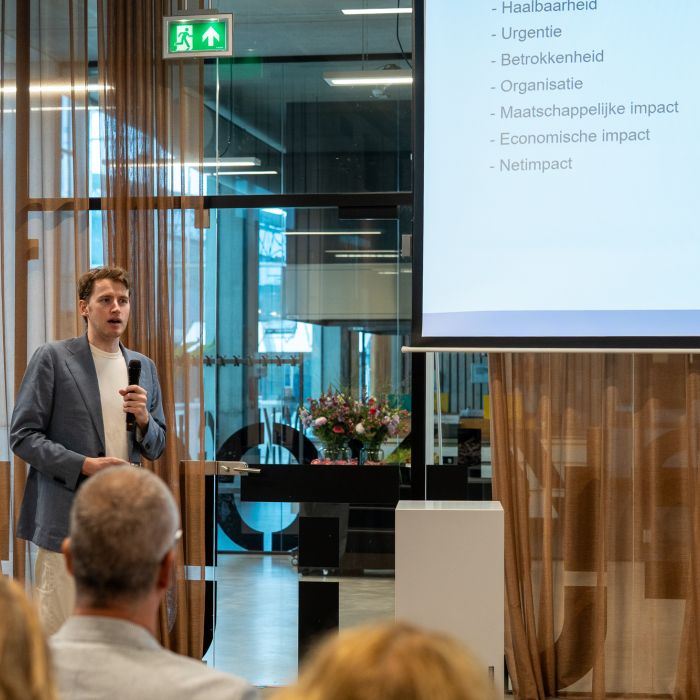
Mike Ummels from the Province of Limburg took those present through the development of energy hubs. Whilst the focus has long been heavily on electricity, the scope is now broadening. Heat exchange, hydrogen and collective charging points can also form part of the solution. At the same time, the focus is shifting increasingly from research to implementation. From October, the Netherlands Enterprise Agency (RVO) will introduce a national grant scheme for feasibility studies. The province is still investigating how it can participate in this scheme.
However, it is precisely following such a feasibility study that a key issue arises. How do you finance the assets and process costs required to actually realise an energy hub? And which projects have the greatest social, economic and grid impact? Factors such as feasibility, urgency, engagement and the degree of organisation play a key role in this regard.
Personal contact is our top priority
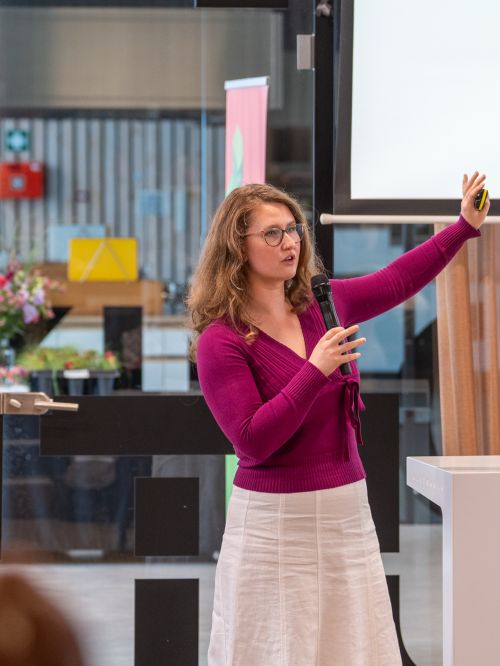
Vueke-Copete Nelissen from the municipality of Eijsden-Margraten used the Gronsveld business park as an example to illustrate what such a development looks like in practice. RES Zuid-Limburg had the capacity to launch a new project, whilst businesses on the site were facing increasingly acute energy shortages.
There was no organised business association, but there was a WhatsApp group. The local council therefore organised a meeting to inform and inspire local businesses. Ten to twelve businesses wanted to take part. This was followed by site visits and energy audits, during which the businesses’ future plans and challenges were also discussed. Ultimately, the initiative was split into two tracks: the energy hub and strengthening the level of organisation.
This yielded more than just insights into energy. The council paid personal visits to local businesses to find out what was going on. This was much appreciated. At the same time, the council’s teams working on the economy and sustainability grew closer together.
The lessons from Gronsveld are surprisingly practical: ensure there is a recognisable figure leading the project, keep business owners informed, and invest in relationship management. After all, a business owner simply works differently to a public authority. And perhaps the most important lesson of all: those who embark on an energy project together can discover many more forms of collaboration along the way.
Organisation as a starting point
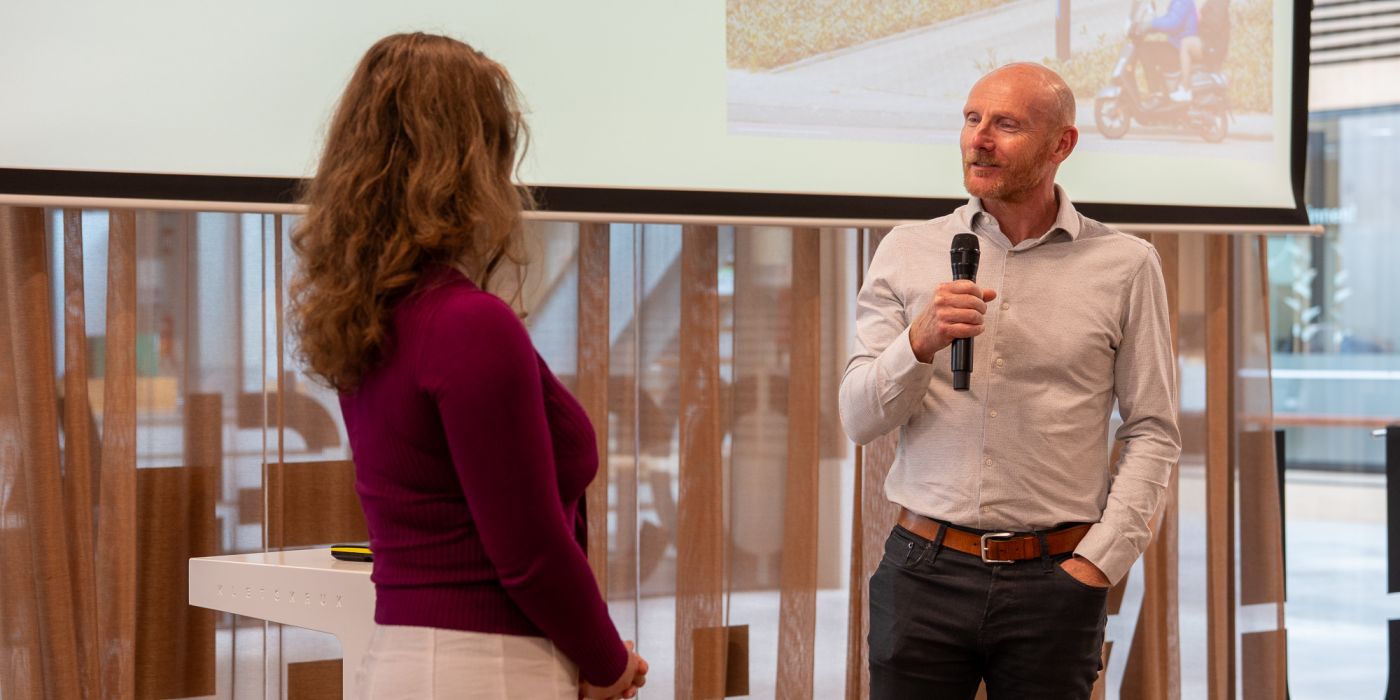
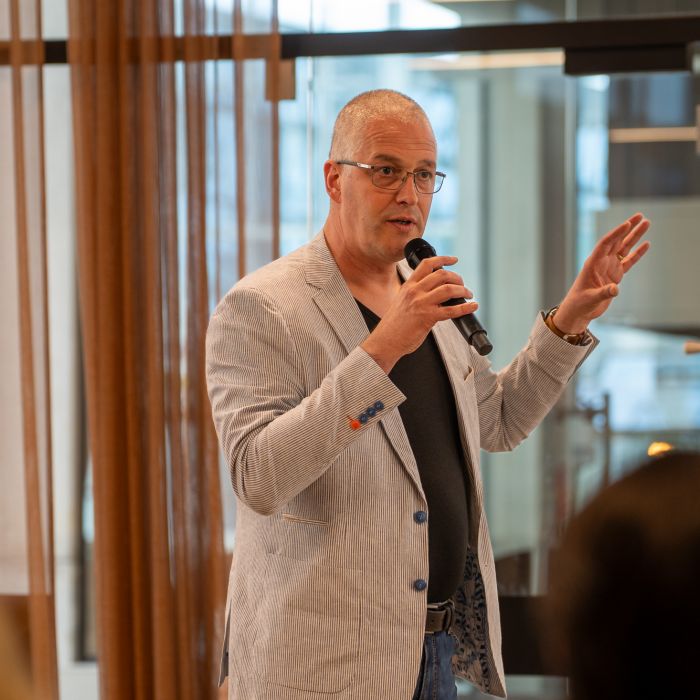
In Central Limburg, it is already clear to see what such an organised foundation can achieve. Wilbert Beurskens, coordinator of the Roermond business parks, demonstrated how PVB Limburg works together with Parkmanagement Midden-Limburg. PVB Limburg provides support and facilitates collaboration on provincial priorities, whilst Parkmanagement Midden-Limburg translates these into concrete projects for businesses, for example relating to energy hubs, grid congestion and collective sustainability initiatives.
This has now resulted in a wide range of projects. In the Roerstreek area, for example, work is underway on green spaces in conjunction with transport, water availability and an energy plan. In Stadsrand Noord, the focus is on greening and an energy hub. This demonstrates that the level of organisation is not an end in itself. It is the foundation from which businesses can jointly tackle larger issues.
First, look in the same direction
The story of Vieky Brands-Luijken and Jos Gitmans from Venlo City Council also showed that collaboration does not happen by itself. The Spikweide industrial estate has been facing a water problem for decades. The site dates back to 1950 and was laid out according to the thinking of the time, which allowed plots to be built on almost entirely. This has major consequences during heavy downpours. Water can even back up through the sewer system, causing considerable disruption.
Initially, business owners and the local council each viewed the problem from their own perspective. It took a long time to build a relationship and reconcile the various interests and responsibilities. Through PVB Limburg, a dialogue was initiated with business owners: what is really going on here, and what matters most to you?
This also made it clear who is responsible for what. Business owners have a responsibility on their own premises, the local authority in public spaces, and PVB Limburg acts as the project leader. Only when these different spheres come together is there scope for a joint solution.
In Belfeld, too, efforts are being made to establish this link. There, the development of a local energy hub is being considered not only in relation to the industrial estate, but also with a view to a possible link with the energy community in the village.
Awareness still needs to grow
Following the case studies from the region, Niels Gisbertz and Lara Klaassen from OML summarised the experiences within PVB Limburg. A key lesson: having a point of contact at a business park makes all the difference. If there is already a park manager or business association in place, you can get started more quickly. If that structure is not in place, the first step is to build trust and raise awareness.
And even then, action does not follow automatically. When it comes to energy, for example, the question is how much capacity a business will actually need in the future. What happens when the vehicle fleet is electrified? What charging capacity will that require? Many business owners still need to become more aware of this.
Furthermore, an energy hub is not a simple solution to grid congestion. The success rate is low, and all sorts of obstacles can arise along the way: from a lack of a business case and technical limitations to funding and legal frameworks. The message is: keep looking for what is possible, even if the original solution proves unfeasible.
When it comes to climate adaptation, even a small, pragmatic approach can generate momentum. In Nederweert, for example, a concrete pilot project was set up in collaboration with local businesses. By taking visible action in public spaces, this also sparked a wider discussion about climate adaptation.
Limburg has a solid foundation
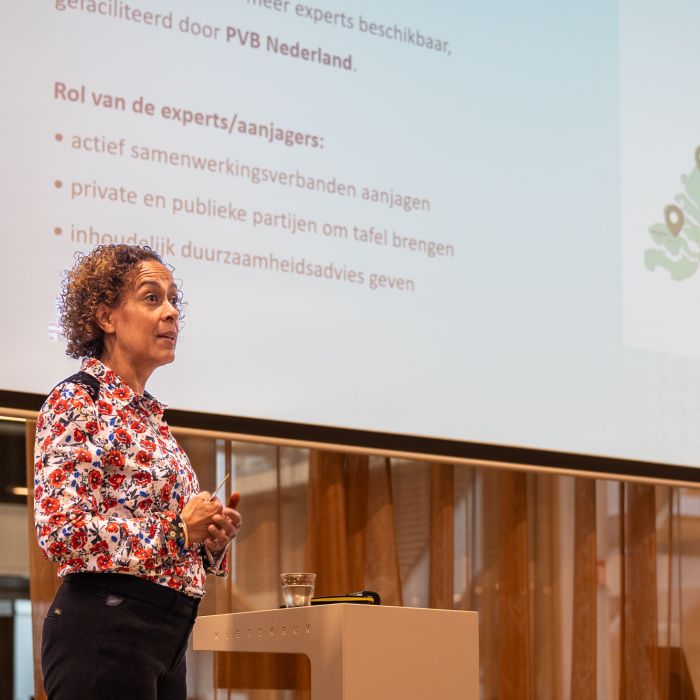
The efforts made in recent years have now given Limburg a strong starting position. Marisol Elisabeth of PVB Nederland highlighted that almost 60 per cent of Limburg’s business parks are organised. Experience at national level shows that there is no single formula for success, but that active drivers, financial support, local cooperation and specific themes such as energy and greening are key prerequisites.
This also meant that, during the annual ‘Samen Vooruit’ event, attention turned to the future. The national PVB programme formally ends in 2027 and may be extended for a further year. In the meantime, PVB Nederland is working on a proposal for the next phase. After all, the foundation that has been built up over recent years is far too valuable to be allowed to be lost afterwards.
For Limburg, this means that the coming period will not simply be about organising more business parks. The next phase is already on the horizon. Contacts have been established, partnerships built, and issues are on the table.
It now comes down to launching projects and ensuring the cooperation required to do so. Moving from organisation to implementation, so that this momentum continues even after PVB Limburg.