
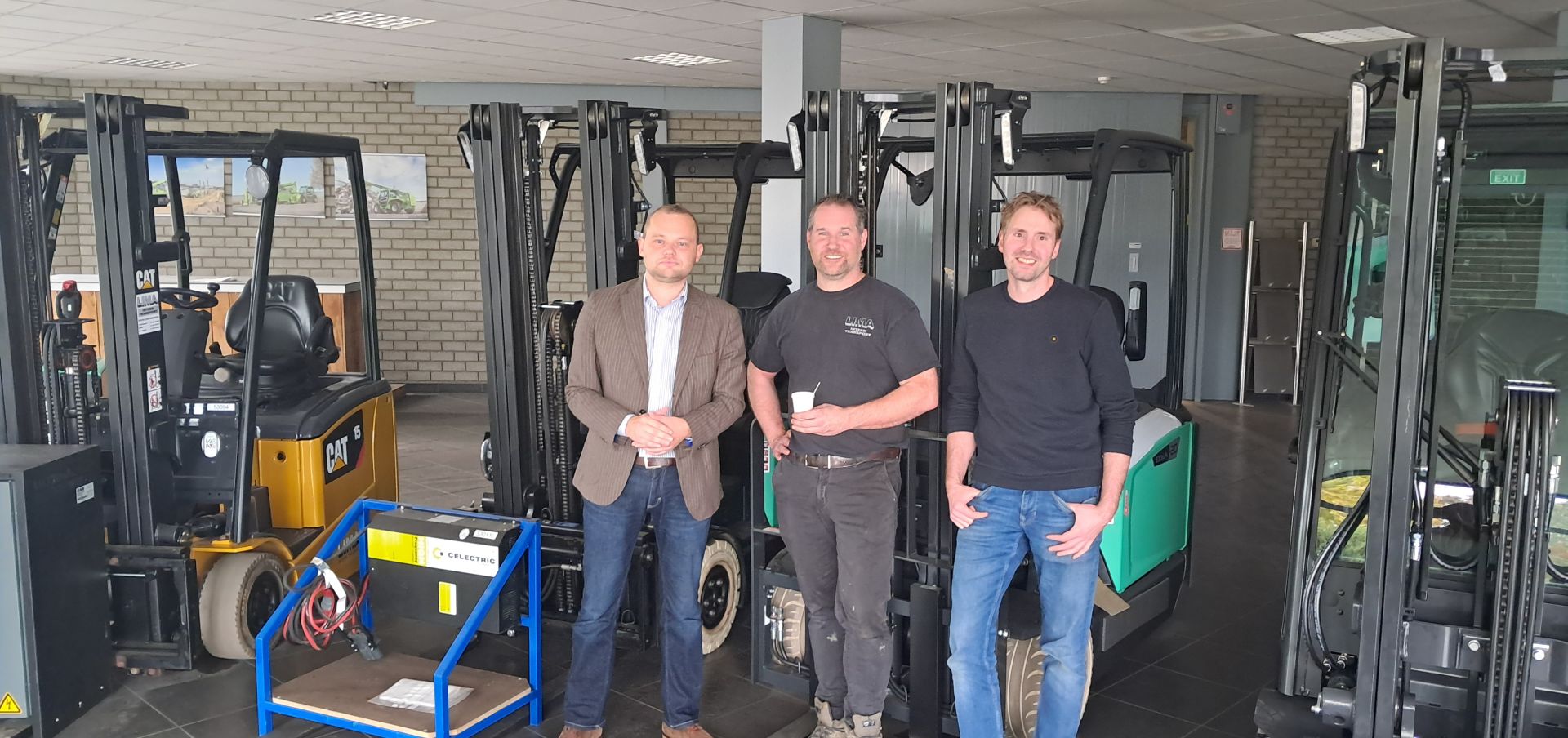
 Foto: gemeente Leudal
5 November | Duurzaam | LIOF
Gemeente Leudal sets its focus on a future-proof Ittervoort business park
In the municipality of Leudal, business owners and the local council are working together to modernise the Ittervoort business park. From energy security and greening to creating more space for business. With a joint action plan and support from PVB Limburg, ambitions are being turned into concrete steps. Councillor Michel Graef and economic policy adviser Randy Habets explain how they are going about it.
The Ittervoort business park faces a number of challenges. Entrepreneurs want to grow, become more sustainable and respond to changing market demands. The availability of energy, in particular, is an urgent issue. “Businesses are increasingly being encouraged to become more sustainable. Not only because of legislation and regulations, but also because customers and business partners are demanding it,” explains Councillor Graef. “At the same time, energy demand is rising. Take, for example, companies that want to electrify their vehicle fleets but are coming up against the limits of the electricity grid. That makes the task quite complex.”
More than just improving sustainability
For the municipality of Leudal, the future of the Ittervoort business park goes beyond the issue of energy. The ambition is to modernise the site across the board. “We want an industrial estate where entrepreneurs can continue to do business successfully in the future,” explains Graef. “That means sufficient energy, but also space to expand, an attractive appearance and more green spaces. It must also be a pleasant environment in which to work.”
In this regard, the council is looking, amongst other things, at the design of public spaces, the traffic layout and links to public transport. The availability of suitable commercial plots also requires attention. For example, there is a need for smaller commercial premises where start-up entrepreneurs can set up their businesses.
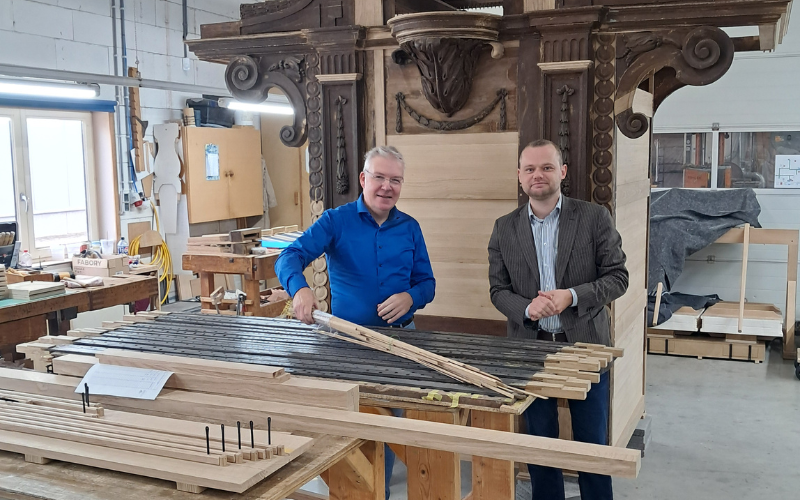 Foto: gemeente Leudal

Cooperation as a starting point
One of Ittervoort’s key strengths is that the businesses are already organised within a Business Investment Zone (BIZ). This provides a solid foundation for taking joint action. “As a local authority, you cannot make separate agreements with every individual business about the future of the business park,” explains Randy Habets, economic policy adviser. “Through the BIZ, we have a central point of contact and can work together to determine what is needed. The challenge is to actively involve as many business owners as possible.”
For although business owners are increasingly recognising the need to become more sustainable, their day-to-day focus is primarily on running their businesses. The local authority therefore sees it as its role to raise awareness, bring stakeholders together and drive initiatives forward. “A good relationship between the local authority and business owners is essential in this regard,” emphasises Randy. “If that trust is there, business owners will know where to turn when they encounter difficulties.”
From energy needs to joint solutions
One of the key challenges at Ittervoort is energy security. Grid congestion is preventing businesses from expanding or becoming more sustainable as they would like. That is why research is being carried out into ways of using the available energy more efficiently.
“We are currently assessing electricity consumption across the business park,” says Randy. “We’re not just looking at the current situation; we’re also talking to businesses about their future energy needs. At certain times, one company may have plenty of electricity available, whilst another may need extra capacity. We’re exploring how we can work together to address this.”
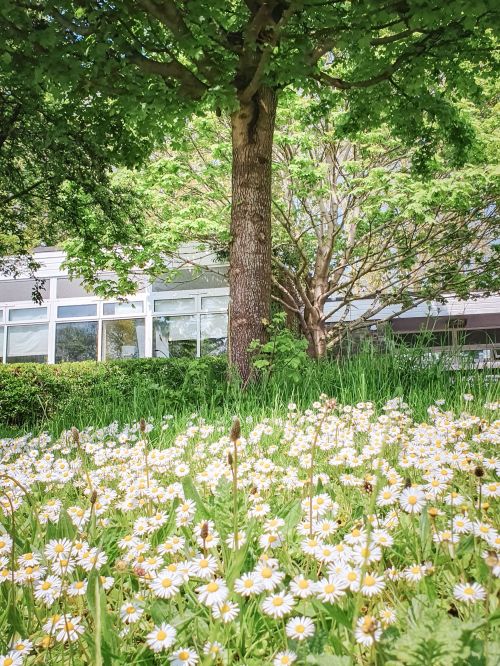 Foto: Pexels
Greening and accessibility are also on the agenda
As well as energy, Leudal is working on other improvements to the business park. One new initiative is an experiment with ‘walking trees’: movable greenery that allows businesses to experience what adding more greenery brings to the environment. “It’s a small initiative, but a good first step,” says Randy. “It allows us to find out where greening works best before we move on to planting permanent trees.”
Accessibility is also being addressed. A mobility assessment has been carried out, which has identified various areas for improvement. A grant has been applied for to tackle these issues in collaboration with local businesses. In addition, the local authority and the BIZ are exploring the possibility of appointing a park manager who can take on more responsibilities on site. The aim is to build a stronger organisation for the long term.
PVB Limburg brings together expertise and stakeholders
To realise these ambitions, Leudal Municipality has sought to collaborate with PVB Limburg. As part of this programme, the parties involved are working to create future-proof business parks in Limburg, including by bringing together entrepreneurs and supporting joint sustainability initiatives.
According to Randy, the collaboration is progressing well. “We’re sitting round the table with the business owners and OML, and the lines of communication are short. OML has a great deal of knowledge in the field of greening and sustainability. This complements the expertise that we, as a local authority, do not always have in-house. And if they don’t know the answer straight away, they have the network to bring the right parties to the table”.
The personalised approach is also proving its worth. For example, a member of staff from Leudal Council visited local businesses alongside Lidy Rutten from LWV to actively involve business owners in the developments. “We can work together in a very practical way,” says Randy. “We can respond quickly at both the administrative and civil service levels. That makes it easier for us to get things done.”
The path to energy security by 2040
Leudal Council and the BIZ have jointly set out the priorities and drawn up an action plan for the next three years, aligned with the duration of the BIZ. “The foundations are in place,” says Randy. “Together with local businesses, we have identified the areas we want to focus on and the steps required to achieve this. Now it’s a matter of actually putting those plans into action.”
The key long-term objective: ‘Energy security for all businesses at the Ittervoort business park by 2040’. Equally important is the way in which the local authority and businesses work together to achieve this. The local authority takes an active role as a connector and facilitator, whilst businesses themselves bear responsibility for developments on their own sites.
Councillor Graef emphasises this division of roles. “As a local authority, we can ensure we have attractive public spaces and position the business park effectively within the region. But the organisation and collaboration between businesses must, above all, come from the entrepreneurs themselves. You need each other to move forward.”
With an active BIZ, a committed local authority and support from PVB Limburg, there is a solid foundation for the coming years. “Ultimately, everyone benefits from a strong business climate,” says Randy. “But we do need to keep working on that together.”
Programma Verduurzaming Bedrijventerreinen (PVB)
PVB was established to help accelerate the future-proofing of business parks in the Netherlands. In Limburg, the LIOF-LWV-OML consortium has set up a province-wide approach to future-proofing business parks.
Are you also interested in working with PVB Limburg? Please get in touch with Renée Boesten.
Check the programme
Contact
Renée Boesten
LIOF
pvblimburg@liof.nl
06 27 96 60 98