
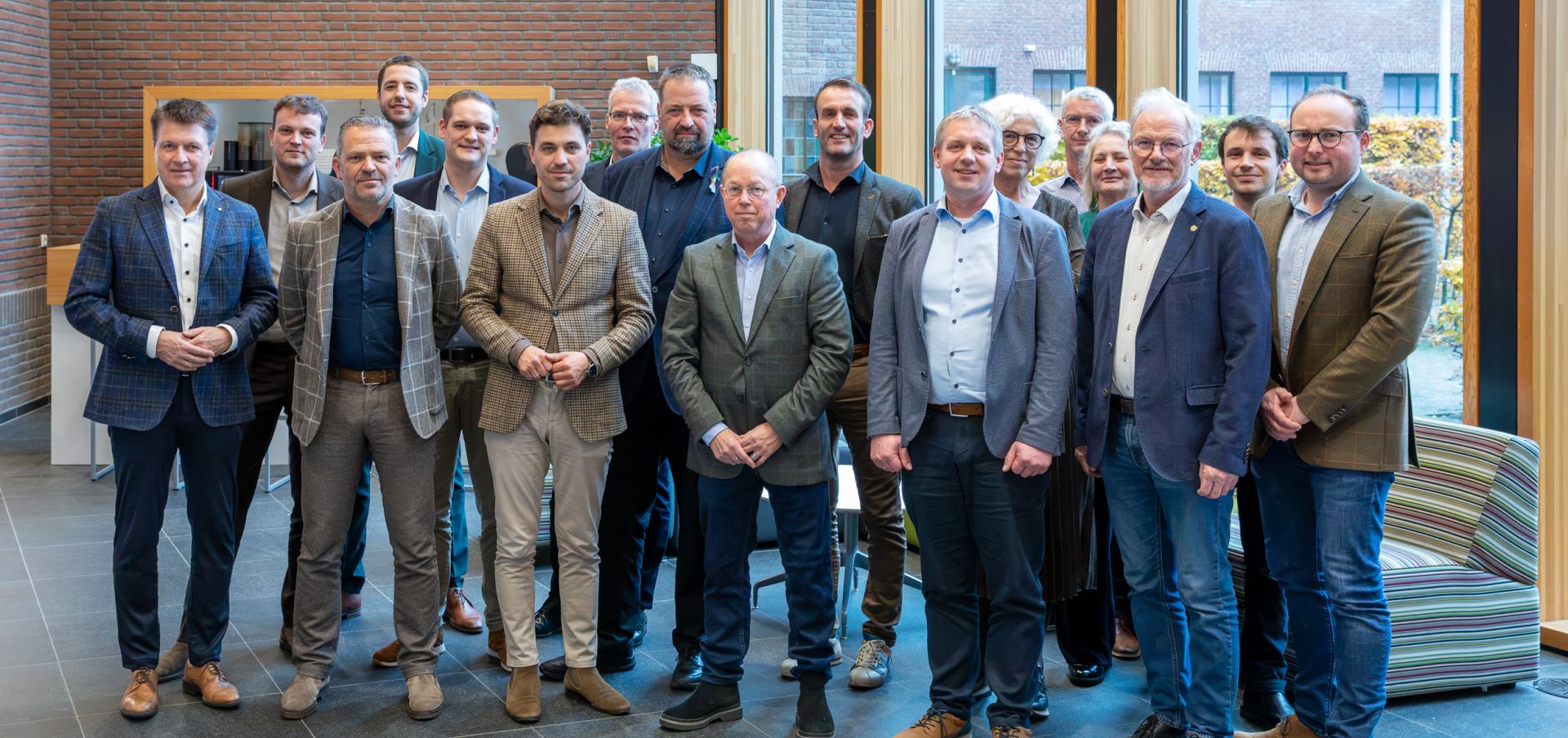
 Fotocredit: Arie Storm
23 November | Toekomst | LLTB
Dutch, German, and Flemish agricultural organizations are strengthening their cross-border cooperation
Agricultural organisations from the Netherlands, Germany and Flanders met in Roermond on 19 and 20 November for a joint Trilateral Agricultural Conference. During the meeting, the organisations discussed the key challenges facing farmers and horticulturalists in the various border regions, as well as the opportunities for greater collaboration in this regard. Although businesses on both sides of the border often face the same European regulations and challenges, there are significant differences in how these are implemented at national and regional level. The organisations therefore wish to exchange knowledge and experiences on a more structured basis and, where their interests align, to present a united front to the authorities.
LTO Nederland organised the conference in collaboration with LLTB, LTO Noord and ZLTO. From Germany, Landvolk Niedersachsen, the Rheinischer Landwirtschafts-Verband, the Westfälisch-Lippischer Landwirtschaftsverband and the Deutscher Bauernverband took part. From Belgium, the Boerenbond and the Bauernbund joined the event. The foreign board members were guests at the annual conference of the Limburg Agricultural and Horticultural Association (LLTB) on Thursday. Friday was devoted to substantive discussions and a joint farm visit.
“As hosts, we are proud to have been able to welcome our German and Flemish colleagues to Limburg, particularly in our anniversary year,” says Thijs Rompelberg, chairman of the LLTB. “The LLTB is celebrating its 130th anniversary, which shows just how much farmers and horticulturalists can achieve when they work together. Here in Limburg, the border is never far away. Our businesses, supply chains and co-operatives already operate across the border on a daily basis. It’s wonderful that we’ve been able to show our neighbours how things work here.”
Same European rules, different practices
During the consultation, the organisations shared the key developments in their regions. These included issues such as nitrogen and the granting of permits, manure and water quality, nature conservation policy, animal health, crop protection and the earning capacity of farmers and horticulturalists. These issues are relevant in all regions, but European rules are implemented differently at national and regional levels. It is precisely in border regions, where businesses and supply chains are closely interlinked, that these differences quickly become apparent, for example in relation to investments or the cross-border sale of manure and other products.
“Farmers and horticulturalists on both sides of the border are largely subject to the same European rules, but the practical implications can sometimes vary enormously,” says Ger Koopmans, chairman of LTO Nederland. “We can learn a great deal from one another. What works well for our neighbours could also be a solution here. And where our interests align, we stand stronger together when dealing with the authorities in our own countries and in Brussels.”
Building on the collaboration
To build on the collaboration that began in Roermond, the organisations wish to keep each other better informed about policy developments and practical experiences. Each organisation will appoint designated points of contact for this purpose. Where views align, the organisations will explore whether they can take a joint approach towards public authorities, as was done earlier this month with a joint letter to the ministers for agriculture of the Netherlands, North Rhine-Westphalia and Lower Saxony. In addition, they wish to meet more frequently, for example at Agritechnica and Grüne Woche. At the invitation of Landvolk Niedersachsen, a further meeting is expected to take place in Lower Saxony in November 2027.