
 Foto: Brightlands
Brightlands High Tech Agro is accelerating research into robotics, AI and autonomous farming
25 June | Healthy, Innovatief, Duurzaam, Toekomst | ShiftLimburg
Maastricht University and Brightlands Campus Greenport Venlo are accelerating the further development of Brightlands High Tech Agro. The university will be able to further expand its research into robotics and artificial intelligence for autonomous systems in agriculture and horticulture thanks to funding of 4.18 million euros from the North Limburg II Regional Deal.
At Brightlands High Tech Agro, scientists from various disciplines are working together on the greenhouse farming of the future. Due to the growing demand for sustainable food and the associated demand for (scarce) labour, the horticulture sector is facing major changes in which digitalisation and robotics will play a key role.
New facility
At Brightlands Campus Greenport Venlo, Maastricht University (UM) and its partners have been responding to these changes in horticulture for some time now. The completion of the Nick Bos Greenhouse and Brightlands High Tech Agro (both made possible by the North Limburg I Regional Deal and investment from UM) are examples of this, as is the launch of the new degree programmes: the Bachelor’s in Sustainable Bioscience and the Master’s in Crop Biotechnology and Engineering.
At the Nick Bos Greenhouse, scientists are conducting fundamental research into plant growth and genetics. At Brightlands High Tech Agro, engineers are investigating the use of robots, drones and autonomous systems in agriculture and horticulture. Funding from the North Limburg II Regional Deal will enable both research programmes to integrate further. To this end, the university will build a second facility at Brightlands Campus Greenport Venlo, consisting of a greenhouse for autonomous cultivation combined with an advanced robotics laboratory.

Plant Meets Robot
Céline Nicole, lead researcher in Horticulture Technologies at Maastricht University, on the importance of the multidisciplinary research made possible by Phase 2: “Collaboration is essential. We need horticultural specialists, data specialists and automation experts who share their knowledge and combine technologies. Only then can we create sustainable, efficient food systems.”
Rico Möckel, principal investigator in Robotics and Intelligent Systems at Maastricht University, is looking forward to working with robots: “Robots can carry out experiments and collect data 24/7, without human bias or fatigue. This allows us to reduce decades of research to a matter of years, helping us to solve food security challenges faster than ever before.”
The key drivers of this research at Maastricht University are, in particular, the biologists at the Brightlands Future Farming Institute (BFFI) and the engineers at the Department of Advanced Computing Sciences (DACS). BFFI has expertise in biology, genetics and crop breeding. DACS contributes its extensive experience in robotics, artificial intelligence and digitalisation.
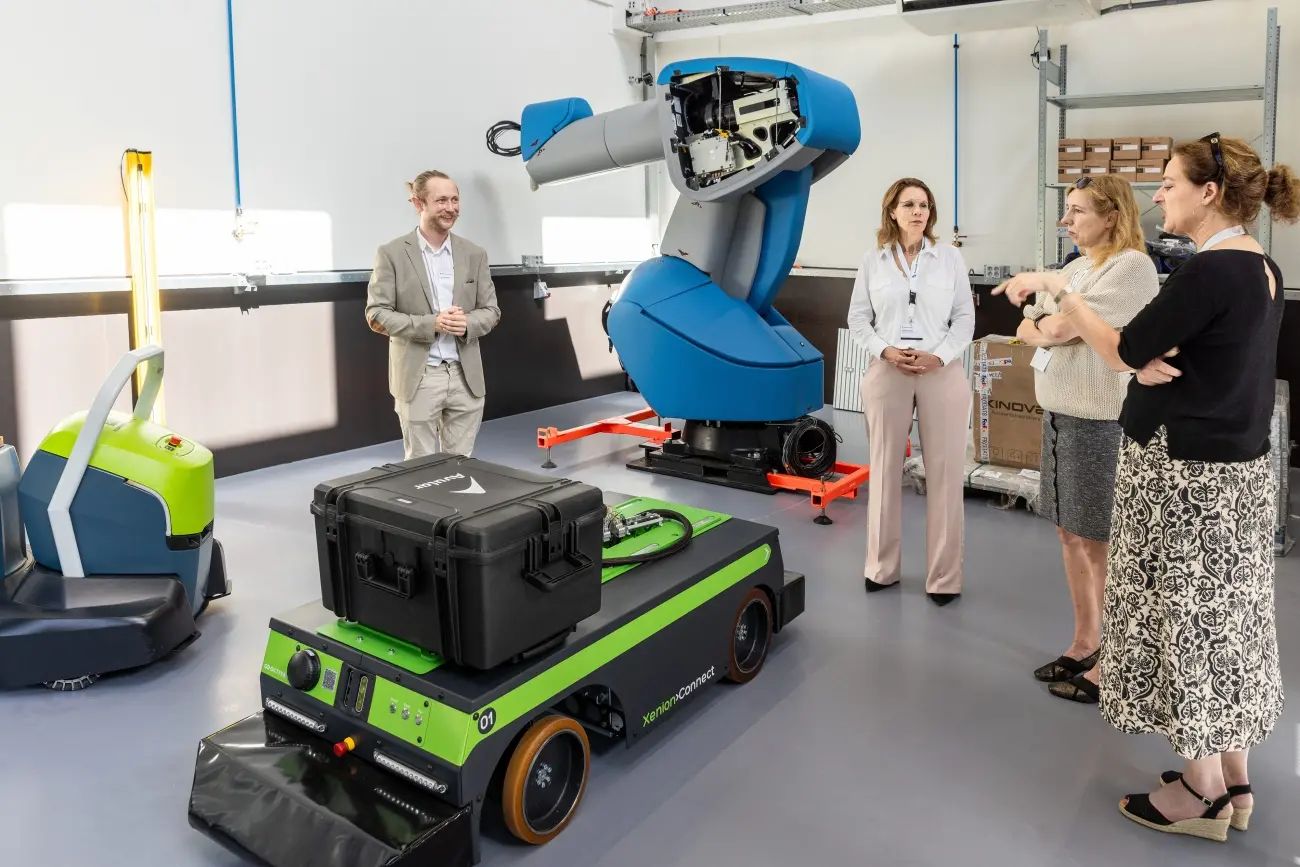 Foto: Brightlands
Interdisciplinary collaboration is key
Interdisciplinary collaboration is therefore central to all research. This holistic view of the horticulture of tomorrow leads to innovation and progress reinforcing one another. Ultimately, the researchers are aiming for an autonomous greenhouse where robots and drones tend to and harvest the plants, with minimal human intervention. In this way, Brightlands Campus Greenport Venlo, together with Maastricht University, aims to contribute to solving challenges relating to food security and sustainability.
In addition, it is expected that autonomous technologies for agriculture and horticulture will also contribute to two other prominent sectors in North Limburg, namely logistics and the manufacturing industry. Maastricht University and Brightlands Campus Greenport Venlo are therefore proactively seeking to collaborate in this area. The same applies to other educational and research institutions in North Limburg.
Two phases
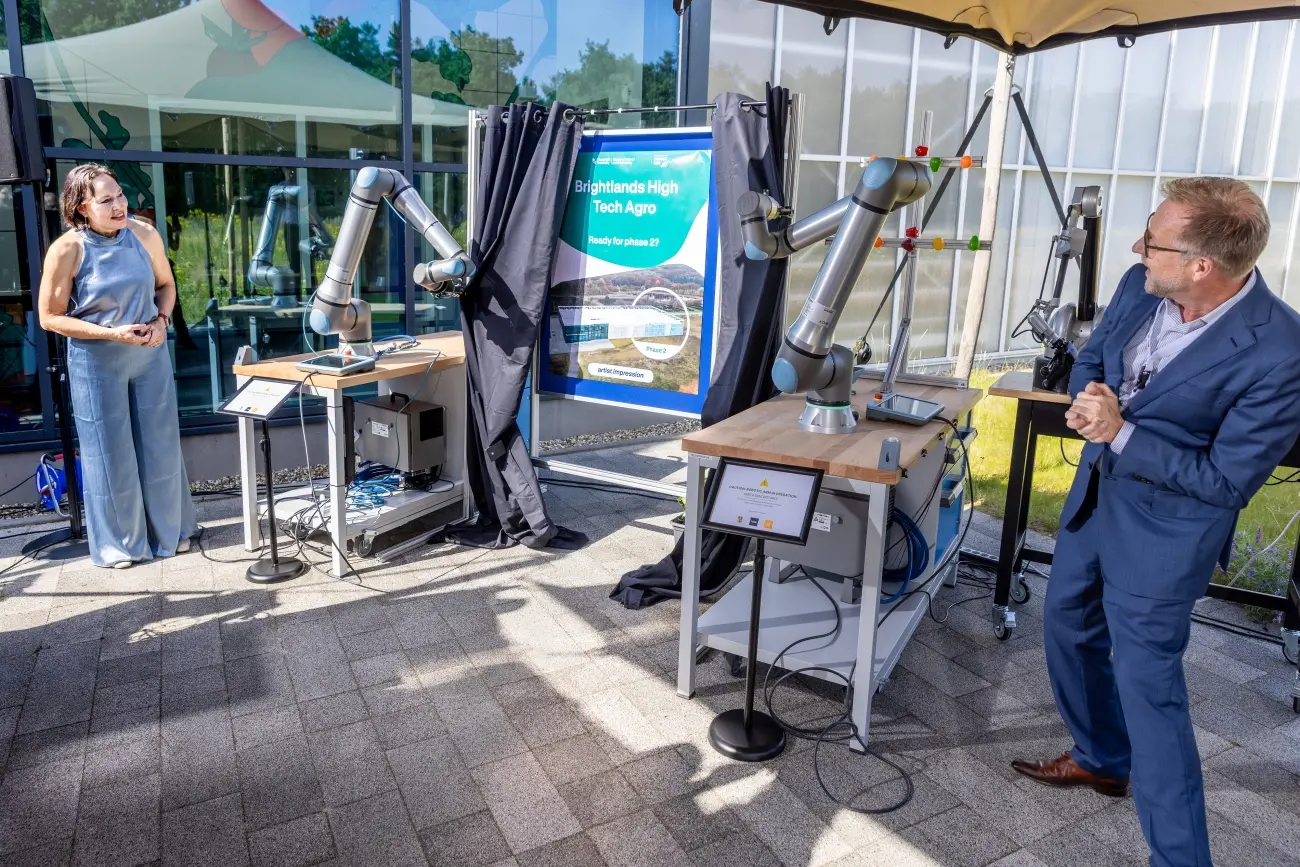
The launch of High Tech Agro consists of two phases. Phase 1 is funded by Regio Deal Noord-Limburg I and focuses on robots, drones, sensors and other devices. During phase 1, High Tech Agro’s ‘robot lab’ is based at Brightworks on the Brightlands Campus Greenport Venlo. The official opening of phase 1 took place on 24 June 2026.
With funding from the North Limburg II Regional Deal, phase 2 can also get underway: the construction of a greenhouse for autonomous cultivation and robotics, where the further integration of biology and engineering will take place. This is expected to be completed by the end of 2028.
This project is made possible in part by the North Limburg Regional Deal I and II, funded by the central government, the Province of Limburg and the North Limburg Region.