
 Foto: gemeente Maastricht
Beatrixhaven Maastricht is building a fossil-free future, step by step
6 March | Duurzaam | ShiftLimburg
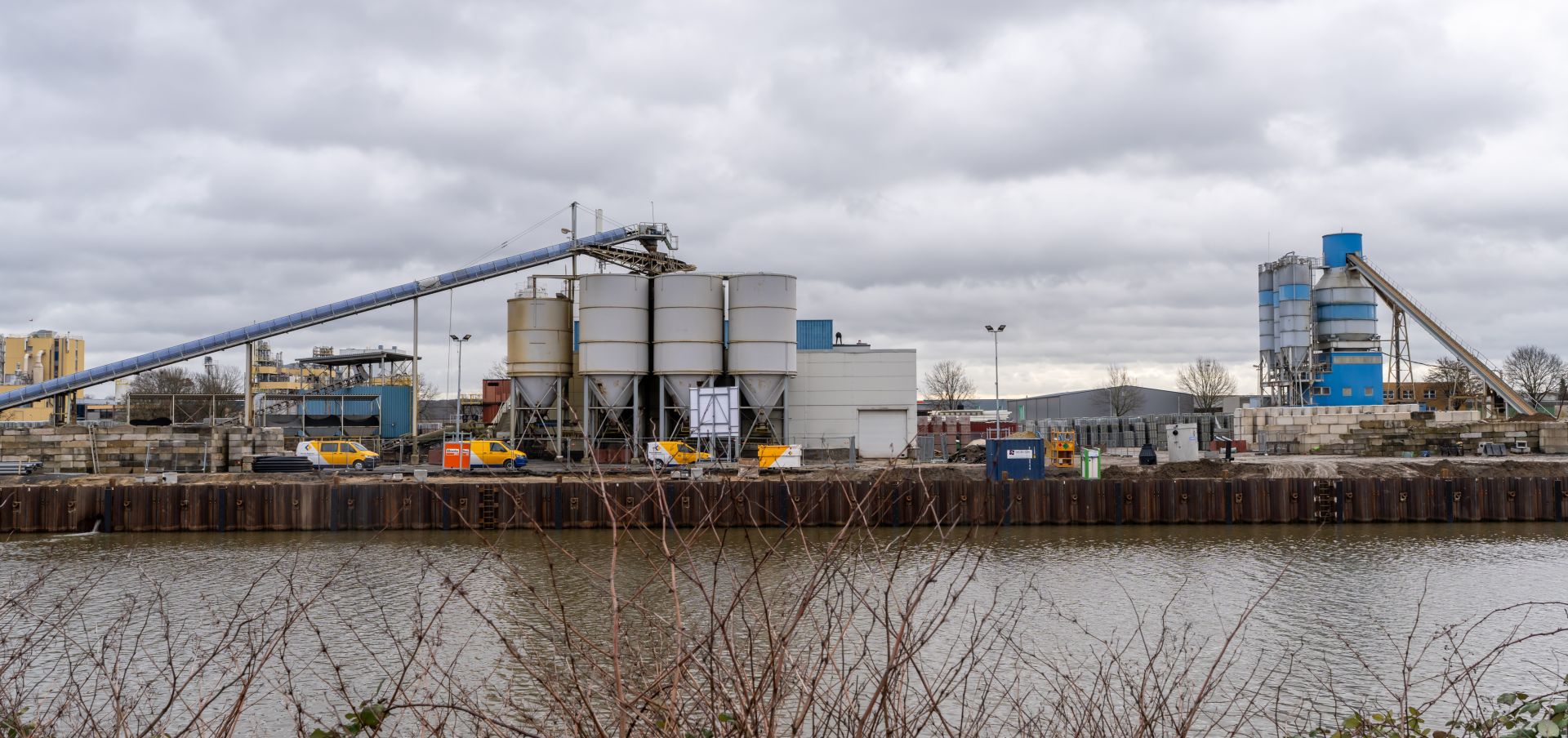
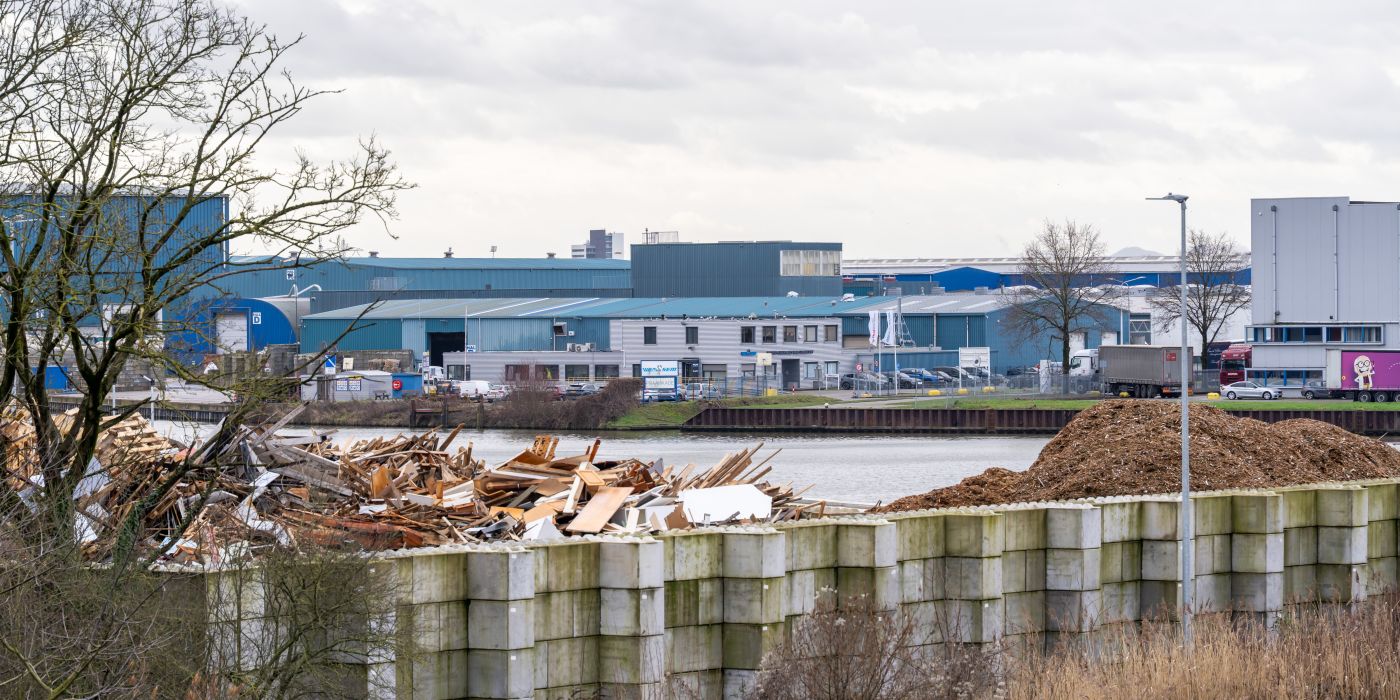
There is a lot going on at the Beatrixhaven industrial estate in Maastricht. Behind the façades of the manufacturing companies, people are not only producing goods but also working hard towards a future without natural gas. The challenge is huge, the transition is complex, and the clock is ticking.
Ivo George, Senior Policy Officer for Sustainable Business (Estates) at Maastricht City Council, is at the heart of this movement. “We are involving residential neighbourhoods and business estates in the energy transition, with the aim of achieving a climate-neutral Maastricht by 2050.”
But how do you put such an ambition into practice in one of the oldest and most complex business parks in the Netherlands? And what is the added value of PVB Limburg in this context?
From vision to a local area approach
In April last year, the city council adopted the ‘Heat & Energy Transition Vision’. The aim is to implement a neighbourhood-based approach towards becoming natural gas-free in all neighbourhoods by 2030. This applies not only to residential areas, but also to business parks.
The Beatrixhaven is one of the first four area-based initiatives launched by Maastricht in 2023. It is by no means a straightforward location: it is home to many energy-intensive businesses with complex production processes.
“For businesses, it’s not just about making the premises natural gas-free,” explains Ivo. “It’s mainly about what happens inside those premises. Can you make your production process more sustainable without compromising the quality of the products you manufacture? Can you use alternative energy sources? That often requires significant investment and innovation.”
The goal on the horizon is clear: a fossil-free energy system. But the path to achieving it is certainly not easy and takes time. That is why we are taking it step by step.
Five steps towards a future-proof site
The short-term approach at Beatrixhaven consists of five steps:
- Saving energy
- Generating your own energy
- Storing your own energy
- Shifting energy consumption
- Sharing energy and working together
Companies can already take action themselves on the first four steps. Step 5 concerns energy hubs, collective charging points and joint energy contracts. The local authority plays a facilitating role here, identifying opportunities and bringing businesses together. The exchange of knowledge between businesses and mutual trust are essential for making progress together.
“Energy exchange between entrepreneurs requires insight, organisation and cooperation,” says Ivo. “And organising that cooperation in the right way is perhaps the biggest challenge of all.”
Major players and small business owners
Thanks to the area-based approach, the local authority was already in close contact with around 50 to 70 larger businesses in Beatrixhaven. That is where the large volumes, the energy-intensive processes and, for example, initiatives relating to energy hubs are to be found. However, Beatrixhaven is home to a total of around 300 businesses.
“You have to include the smaller businesses as well,” Ivo emphasises. “They may be less visible, but together they make up a large part of the area. What’s more, they often have less time to delve into the topic of energy.”
The added value of PVB Limburg
PVB Limburg facilitated the involvement of programme manager Lester Wintjens (LWV). Whilst the local authority focused on the broader strategic issues and the long-term path to becoming fossil-free, Lester took charge of approaching and speaking to around a hundred smaller business owners.
This had several effects:
- Scope: Smaller businesses were actively informed about the local authority’s area-based approach.
- Awareness: entrepreneurs gained an insight into what lies ahead for them as we approach 2050.
- Trust: as LWV is also linked to the Park Management (SIM), an existing network was already in place.
- Relief: the local authority received capacity support for a time-consuming aspect of its work.
“It takes an enormous amount of time to speak to so many businesses individually,” says Ivo. “Especially as energy is often an afterthought for many business owners. They’re busy keeping their businesses running. PVB has really helped us with that.”
Thanks to that commitment, all business owners were able to be included in the narrative. “That’s all about the principle of participation and equality. You want to offer everyone the same opportunities – not just the frontrunners.”

Short-term interests versus long-term ambition
The local authority is looking ahead to 2050. But business owners are often preoccupied with the realities of today and the next five years.
Grid congestion, rising energy costs and contractual restrictions at Enexis are currently a factor. That is why the approach also focuses on practical gains, such as organising processes more efficiently, shifting consumption to off-peak periods, making use of subsidies and managing existing grid capacity more effectively.
Ivo cites an example of a company that, by taking a different look at its processes, was able to save nearly 40,000 euros a month on energy costs. “Insights like that help to win business owners over. The energy transition isn’t some abstract story about the future. It affects how you run your business today.”
Organise before investing
A collective energy system – involving local generation, storage and exchange – requires a degree of organisation. Businesses need to know one another, trust one another and be willing to work together. According to Ivo, this presents a structural challenge:
“Before you can build a new energy system, you need to organise the site properly. And it helps enormously when an organisation such as PVB Limburg involves and connects smaller businesses.” An active business association such as SIM Beatrixhaven is also an important partner in this regard.
Meanwhile, the local authority is working on an energy strategy for Beatrixhaven. This year, the roadmap towards a fossil-free energy system will be outlined. In parallel with this, work is underway in the vicinity of Beatrixhaven on a new residential area with its own district heating and cooling network, for which a municipal heating company is being set up. In the future, the possibility of linking up with businesses will be explored.
Still in the midst of the transition
“We’re really still right in the middle of that transition,” says Ivo. “It’s not a straight line. There are constant innovations. New techniques. Different ways of working together.”
“Today, around 20 per cent of the energy system is electric,” he continues. “That figure is set to rise to between 60 and 80 per cent in the future. This calls for a fundamentally different way of thinking about energy: using it when it’s available, storing it for later use and managing peaks more intelligently.”
According to Ivo, that realisation really needs to sink in more. And businesses need help with that. “The local authority is driving the process and providing support, but ultimately the responsibility lies with the business owners themselves. PVB Limburg is taking on the role required in this regard.”
For more information about the Maastricht City Council’s area-based approach, please visit: Beatrixhaven Business Park | Maastricht City Council
Get started
Would you also like to get started with organised collaboration and future-proof business parks in your local authority? Take inspiration from the City of Maastricht and get in touch with PVB Limburg for an exploratory meeting.
Watch the programme
Contact
Renée Boesten
LIOF
pvblimburg@liof.nl
06 27 96 60 98