
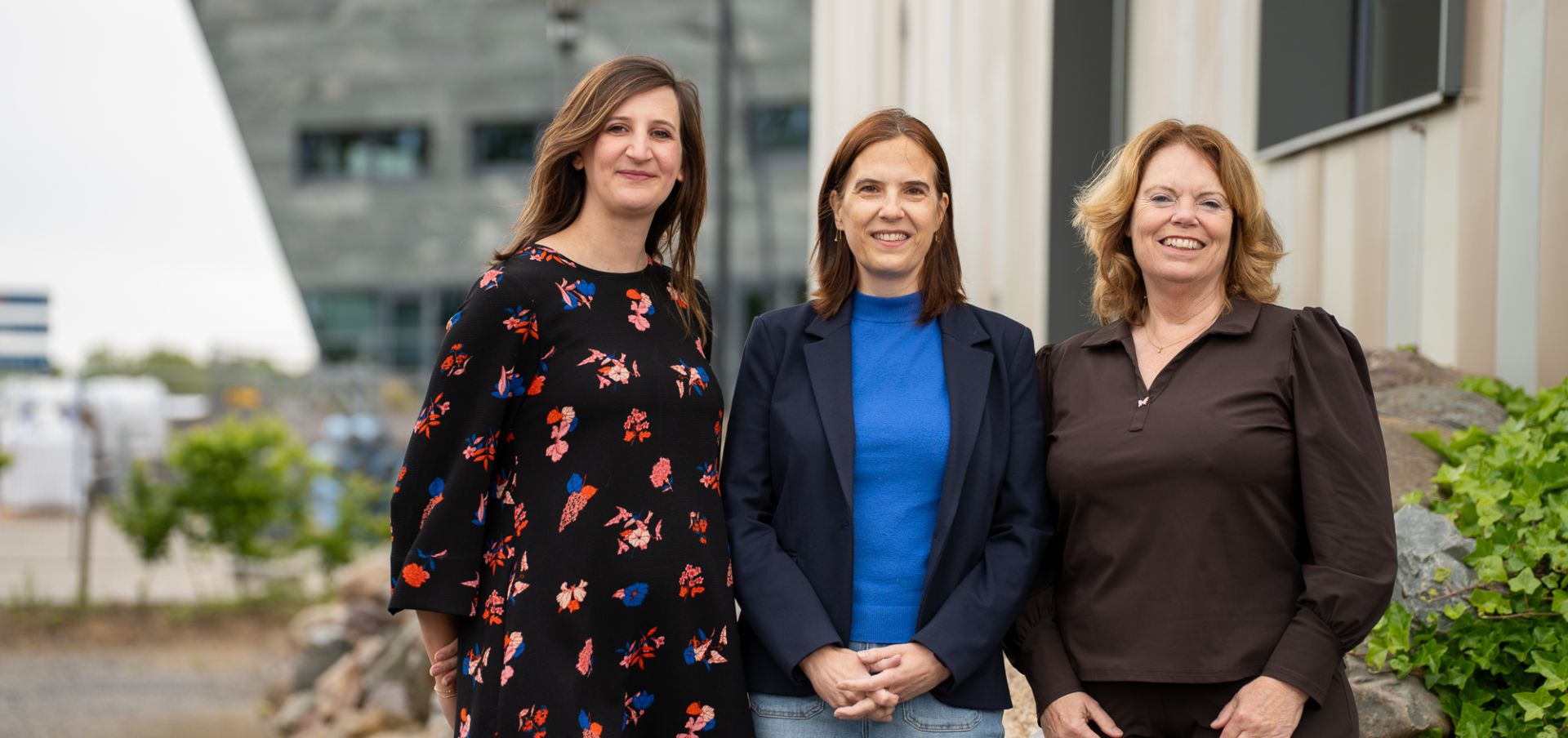
 Fotografie Ron Wiersma
Collaboration as a Driving Force for Future-Proof Business Parks in Limburg
5 June | | LIOF
When it comes to sustainability, we tend to think of housing or transportation. But a large part of the challenge lies in places that are less visible—yet just as crucial: industrial parks. They play a key role in Limburg’s future.
These sectors are characterized by massive production, transportation, and innovation. At the same time, challenges are piling up. The power grid is at capacity, demand for fossil-free energy is growing, climate change is causing heat stress and flooding, and pressure on available space is increasing. For entrepreneurs and municipalities, this challenge feels complex. After all, where do you even start? And how do you balance all your own interests and priorities?
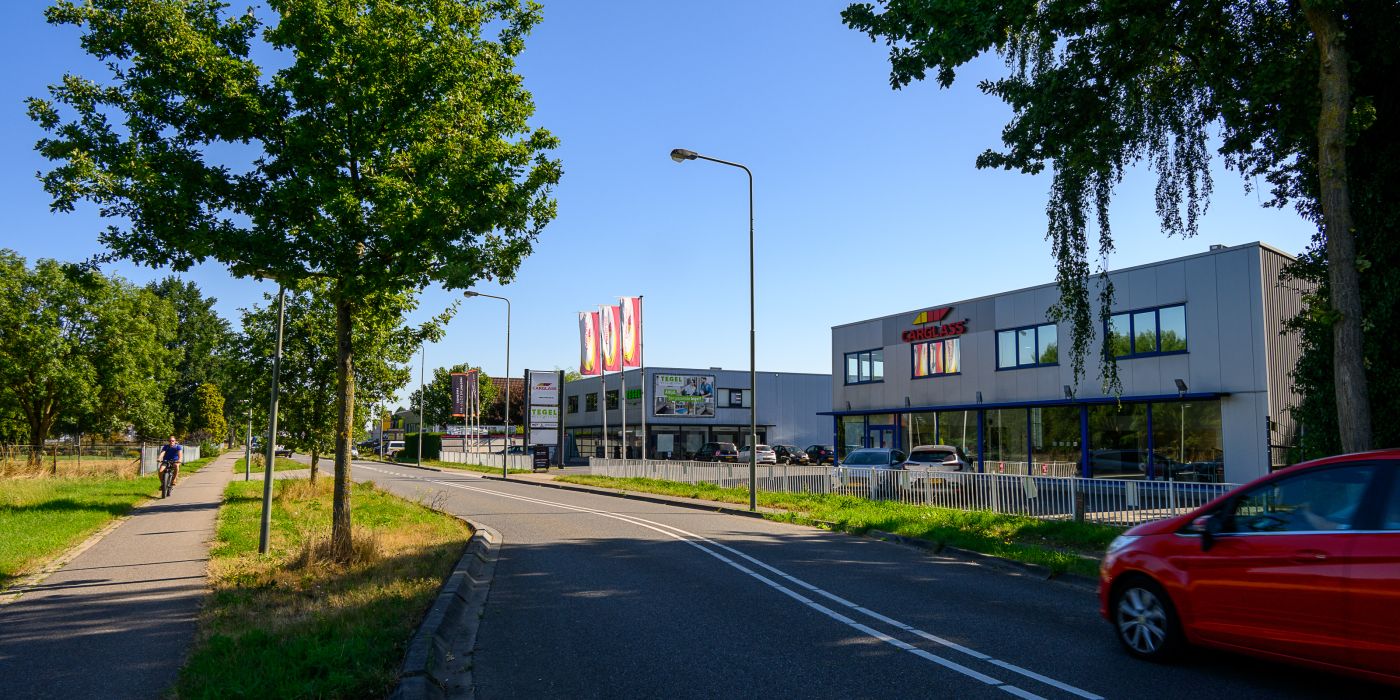
PVB Limburg
PVB Limburg is a partnership between the Limburg Employers' Association (LWV), the Central Limburg Development Agency (OML), and LIOF. Each partner contributes based on its own expertise: OML helps entrepreneurs in business parks take concrete steps toward sustainability, LWV supports the organization of collaboration among companies in the parks, and LIOF, in addition to program implementation and process guidance, facilitates knowledge sharing with all stakeholders, including through the shiftLimburg platform.
This division of responsibilities is important because making business parks more sustainable requires more than just isolated measures: entrepreneurs need practical guidance, mutual cooperation, and access to knowledge and programs in order to work together toward future-proof, resilient business parks.
Go to the website
The foundation: good organization
Lidy Rutten, a champion for the LWV, sees this in many business parks: entrepreneurs who are willing to act, but each operates based on their own circumstances. Their focus is on issues such as staffing, costs, business continuity, and growth. Sustainability is an additional consideration, but many challenges extend beyond the individual company.
“A business park consists of various entrepreneurs and owners, each with their own interests and challenges,” says Lidy. “But issues such as energy, grid congestion, and climate adaptation affect the entire park. As an entrepreneur, you can’t solve these problems on your own. That’s why you need each other.”
That is precisely where the first challenge lies. Without a clear organizational structure, there is a lack of cohesion, ownership, and a point of contact with municipalities. As a result, good ideas remain stuck in isolated initiatives.
According to Lidy, a high level of organization is therefore the foundation for truly getting sustainability off the ground. “Only when business owners organize themselves—for example, through a business association, park management, or working group—does the opportunity arise to jointly formulate goals, make decisions, and undertake collective projects.”
That organization is important in practice. But it also fosters trust and builds support. “Sustainability efforts shouldn’t be a top-down process,” Lidy emphasizes. “It needs to be a collective effort involving entrepreneurs, municipalities, and other stakeholders.”

Conversation as a Starting Point
Strengthening that level of organizational engagement takes time, attention, and personal contact. In practice, this means: getting out into the field, talking to business owners, and listening carefully to what’s going on. Don’t start with a policy goal or a ready-made plan, but with the question of what business owners themselves are experiencing.
“You have to take business owners seriously,” says Lidy. “Listen to their questions and concerns. Focus on what’s urgent for them, not on what seems logical on paper. That could involve rising energy costs, expansion plans, accessibility, safety, or flooding. Such relatable themes create space to take a broader view. It’s precisely these small, concrete issues that can be the starting point for larger steps toward sustainability.”
An independent facilitator plays a key role in this: someone who monitors the process, brings different interests together, and ensures that discussions don’t remain isolated from one another. “That role is essential for turning separate conversations into a single, unified voice. By starting small and achieving initial results together, trust grows. And with it, the willingness to look beyond one’s own company,” says Lidy.
From Awareness to Action
A specific issue creates an opportunity for the next step: concrete projects in industrial parks. This is where OML’s role comes into sharp focus. Vanessa Silvertand sees a growing sense of urgency, particularly in the field of energy.
“The vast majority of companies don’t yet realize that they could face a problem with energy availability,” says Vanessa. “Companies are electrifying their fleets, looking to expand, or phasing out natural gas. But if you need more energy than is available, you have to start thinking differently.”
According to her, that awareness is an important first step. “Many entrepreneurs know that grid congestion is a problem, but they don’t always make the connection with their own future plans. Yet the consequences can directly affect their growth, production, sustainability goals, and investments.”
Collaboration can then be part of the solution. One example is the development of energy hubs, where companies in a business park better coordinate their energy use. “If companies are connected to the same grid but need power at different times, collaboration and energy exchange can be an option,” Vanessa explains. “For some areas, this can help them make progress even within existing capacity.”
The Benefits of Greening
In addition to energy, climate adaptation is also becoming increasingly urgent in business parks. “Most sites are heavily paved,” says Vanessa. “That makes them vulnerable to heat stress and flooding, but it also creates a less attractive work environment. In the summer, water has a hard time draining away during heavy downpours. Greening helps capture rainwater more effectively and lower the temperature. Plus, it makes a site a more pleasant place to work and spend time.”
This gives sustainability a broader meaning. It’s not just about energy, but also about quality of life, health, and the quality of the work environment. You’re not just solving a problem; you’re also adding value. In addition, greening contributes to biodiversity, better air quality, and real estate that retains its value. This also gives sustainability an economic component.
Implementation is proving to be complex
Still, the transition to implementation isn’t straightforward. Many plans get stuck in the exploratory phase because the path to realization is complex. “Ultimately, it comes down to money and space,” says Vanessa. “Who will pay for the construction? Who will maintain it? And what are you giving up in exchange? Those are questions we need to answer together first.”
The same is true for energy projects: the reality on the ground is complicated. “For an energy hub, you need a sound business case. It has to be technically feasible, but it also has to make sense from an organizational standpoint. Otherwise, it will get stuck.”
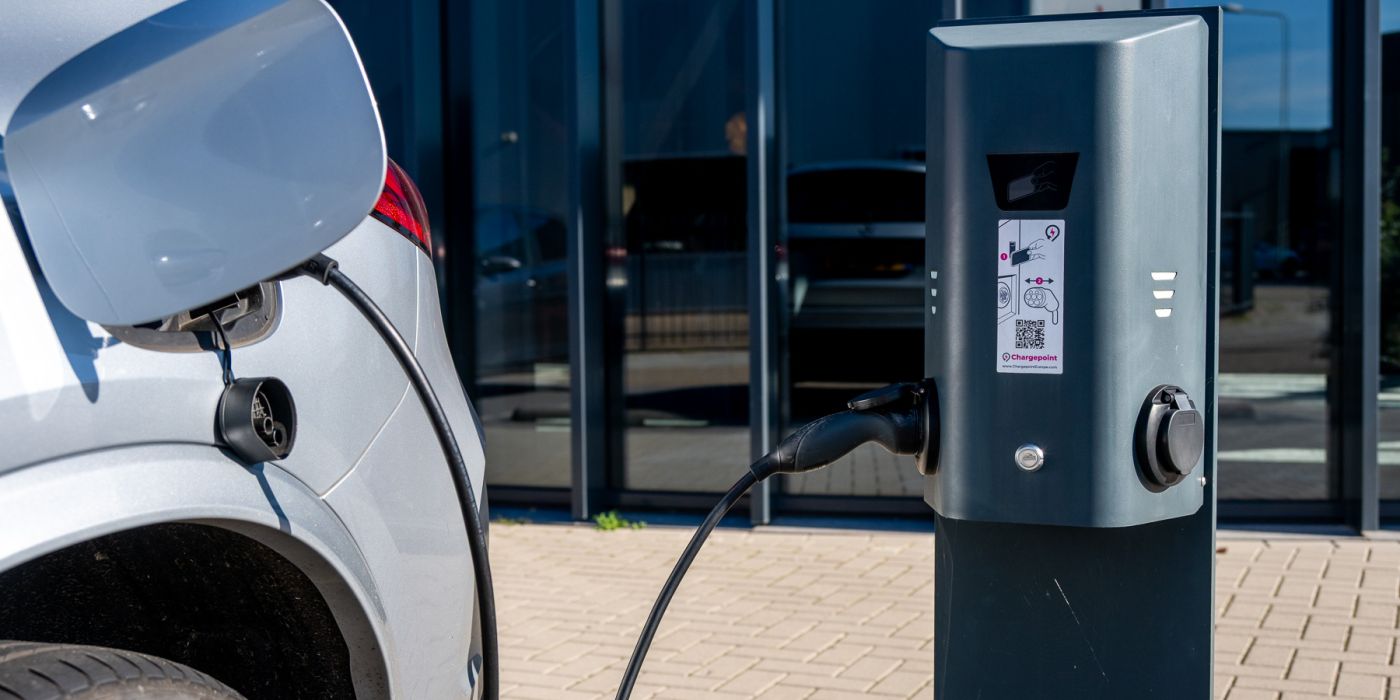
Korendal as a best practice case
The Municipality of Mook and Middelaar is a good example of how this approach works. As a small municipality with limited capacity, it faces a familiar challenge: there is a desire to make the Korendal business park more sustainable, but no clear organizational structure yet to tackle this in collaboration with local businesses.
The first step, therefore, was to organize collaboration. Contact was established with business owners through PVB Limburg. Discussions shed light on the current situation on the ground. Opportunities, needs, and challenges came to light. Business owners gained a better understanding of each other’s situations and interests. This not only fostered understanding but also built support.
Building on that foundation, we can explore next steps in the areas of climate and energy. The case study shows that sustainability doesn’t start with a solution, but with trust, clarity, and ownership. Only once that foundation is in place does the opportunity arise to explore collective solutions, such as energy sharing through an energy hub.
In doing so, Korendal exemplifies the strength of PVB Limburg: partners each contribute from their own roles and, together, drive progress in a business park.
Knowledge as a Catalyst
In addition to organizing and implementing projects, PVB Limburg focuses on building a center of knowledge and expertise. According to Renée Boesten of LIOF, this is essential for accelerating the next phase.
“Many entrepreneurs are still not sufficiently aware of energy and climate issues—or of what they themselves can do about them in concrete terms,” says Renée. “Grid congestion, flooding, heat stress, and the energy transition often sound complex. As a result, they remain abstract.”
The knowledge and expertise center aims to make that complexity understandable and actionable—not by adding even more information to what’s already available online, but by providing a clear overview. “We don’t want to be just another information platform,” Renée emphasizes. “Our role is to bring initiatives together, share practical experiences, and quickly refer entrepreneurs to the right partner.”
Learning from What Works
An important part of the knowledge and expertise center is making broader use of lessons learned from individual projects. What is learned at one business park can be valuable to other municipalities, entrepreneurs, and park managers. That is why PVB Limburg organizes meetings on topics that matter in practice, such as greening, energy hubs, and grid congestion.
“During these meetings, we bring together parties that don’t always naturally interact with one another,” says Renée. “You often see that they want the same thing but are waiting for each other to take the first step. By facilitating the conversation, we create momentum.”
There is also active coordination with national-level organizations, including PVB Nederland and other regional development agencies. This allows insights from Limburg to be compared with national trends and successful approaches to be shared more widely. “Good examples inspire and demonstrate that sustainability is achievable. Major changes often consist of small, manageable steps.”
Building Together for the Future
Making business parks more sustainable is a challenge we all face. It requires maximum cooperation—stakeholders who can find common ground and take steps together: entrepreneurs, municipalities, park management, and partners, each taking ownership of their own responsibilities. The strength lies not in a single solution, but in a comprehensive approach. This is how we work together to build future-proof business parks in Limburg.
The foundation has now been laid. Significant progress has been made at dozens of business parks. Municipalities have joined the effort, entrepreneurs are getting involved, and concrete sustainability projects are emerging with increasing frequency. In the coming years, the focus will shift further: from organizing to implementing. And from implementing to scaling up.
PVB Limburg is on track. The partnership is firmly established, and the momentum has been set in motion. Now it’s a matter of maintaining that momentum, accelerating it, and turning it into a lasting impact for entrepreneurs, municipalities, and the Limburg economy.
Working Together to Promote Sustainability?
Find out more about PVB Limburg by clicking the link below or email us directly at pvblimburg@liof.nl.
Go to PVB Limburg
Contact
Renée Boesten
LIOF
pvblimburg@liof.nl
06 27 96 60 98